2004 – 2011
die neue ehrlichkeit
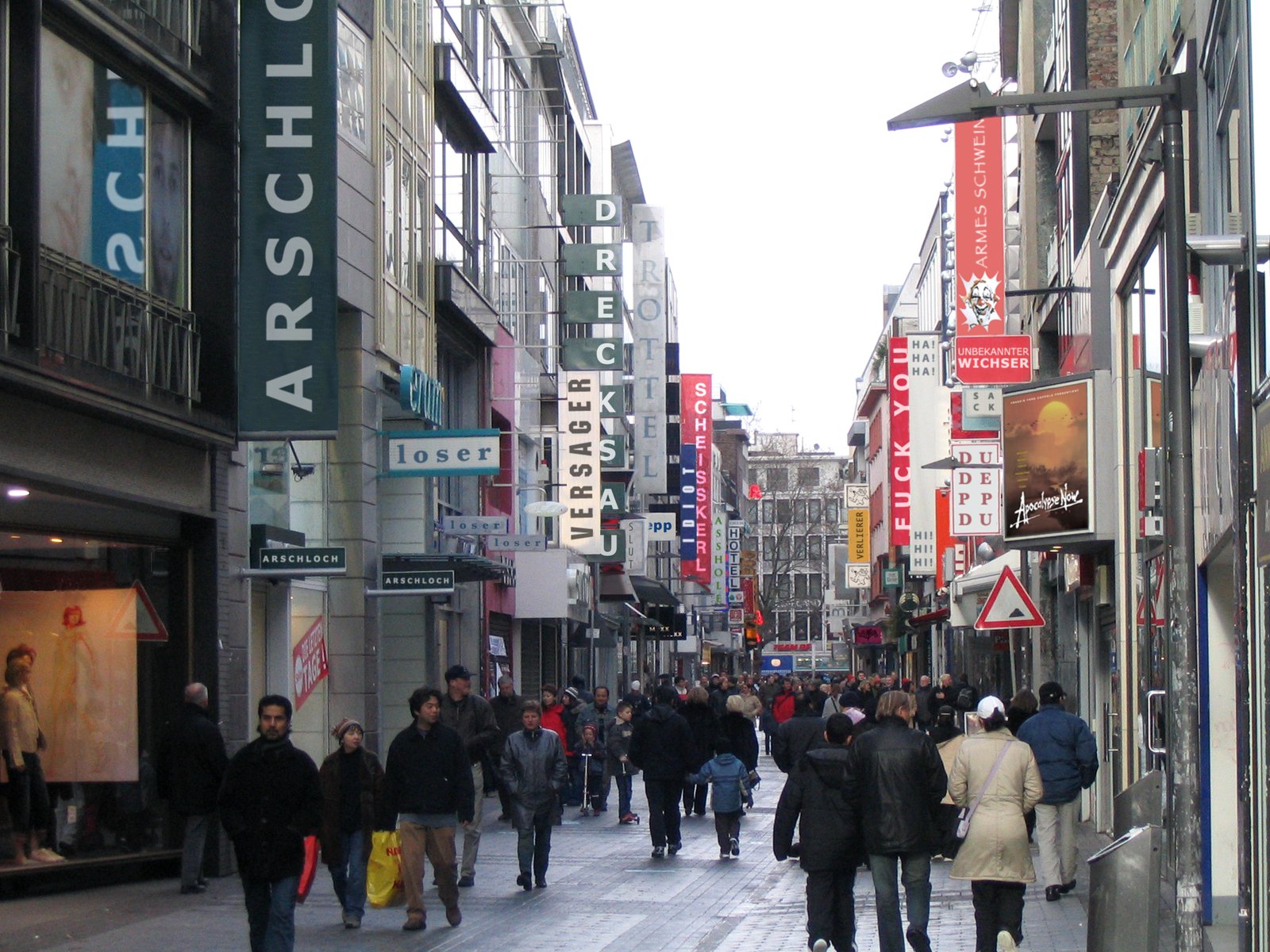
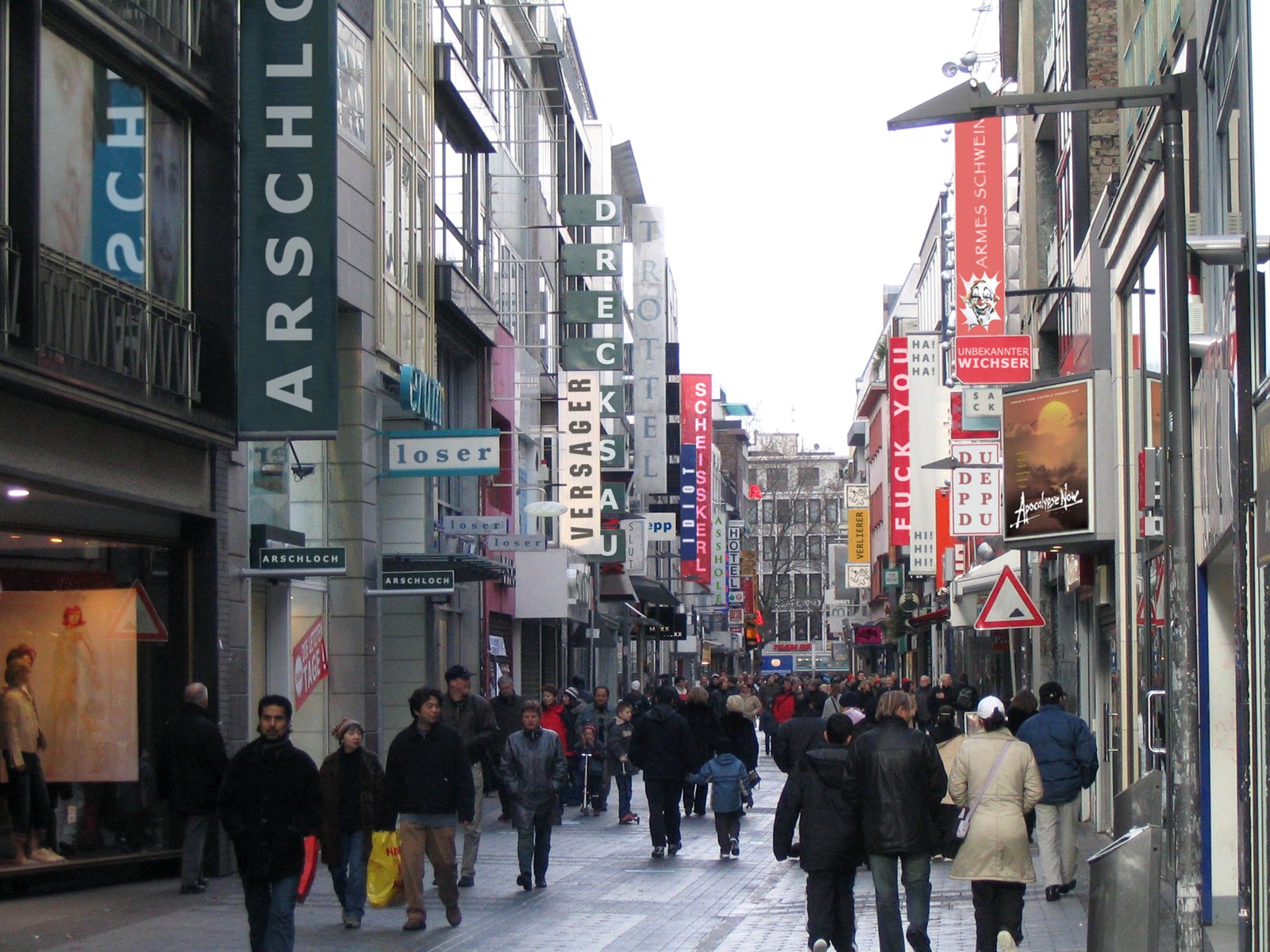
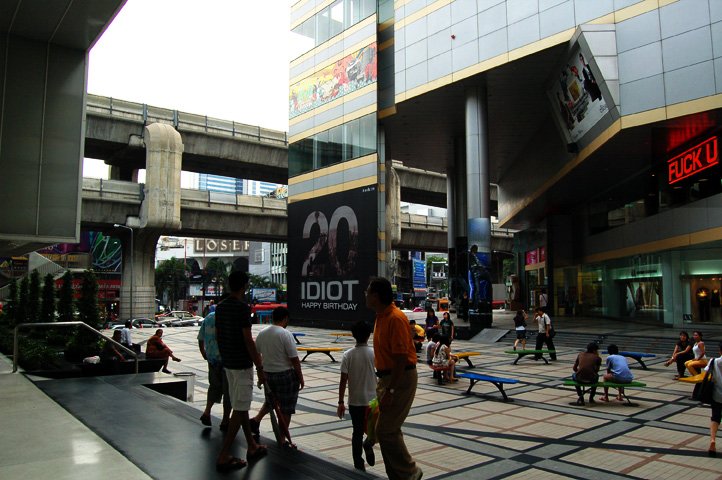
The new honesty — the word advertising will never say, set in the language of the shopping street and montaged back into the photograph of the city, from Cologne and Düsseldorf to New York and Bangkok.
2004 – 2011
The new honesty — the word advertising will never say, set in the language of the shopping street and montaged back into the photograph of the city, from Cologne and Düsseldorf to New York and Bangkok.
concept
"the surface covering the vulgar and banal needs to be
continuously renewed and re-edited in an even more spectacular
way."
— Florian Kuhlmann, Cave goes Pop Culture
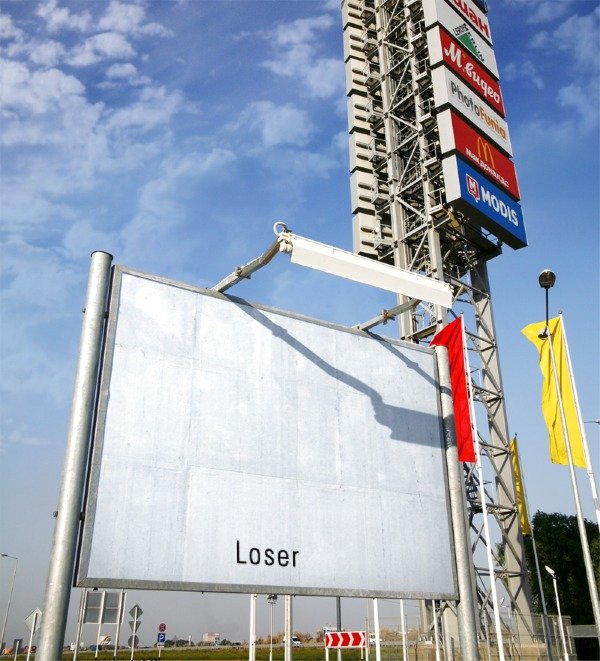
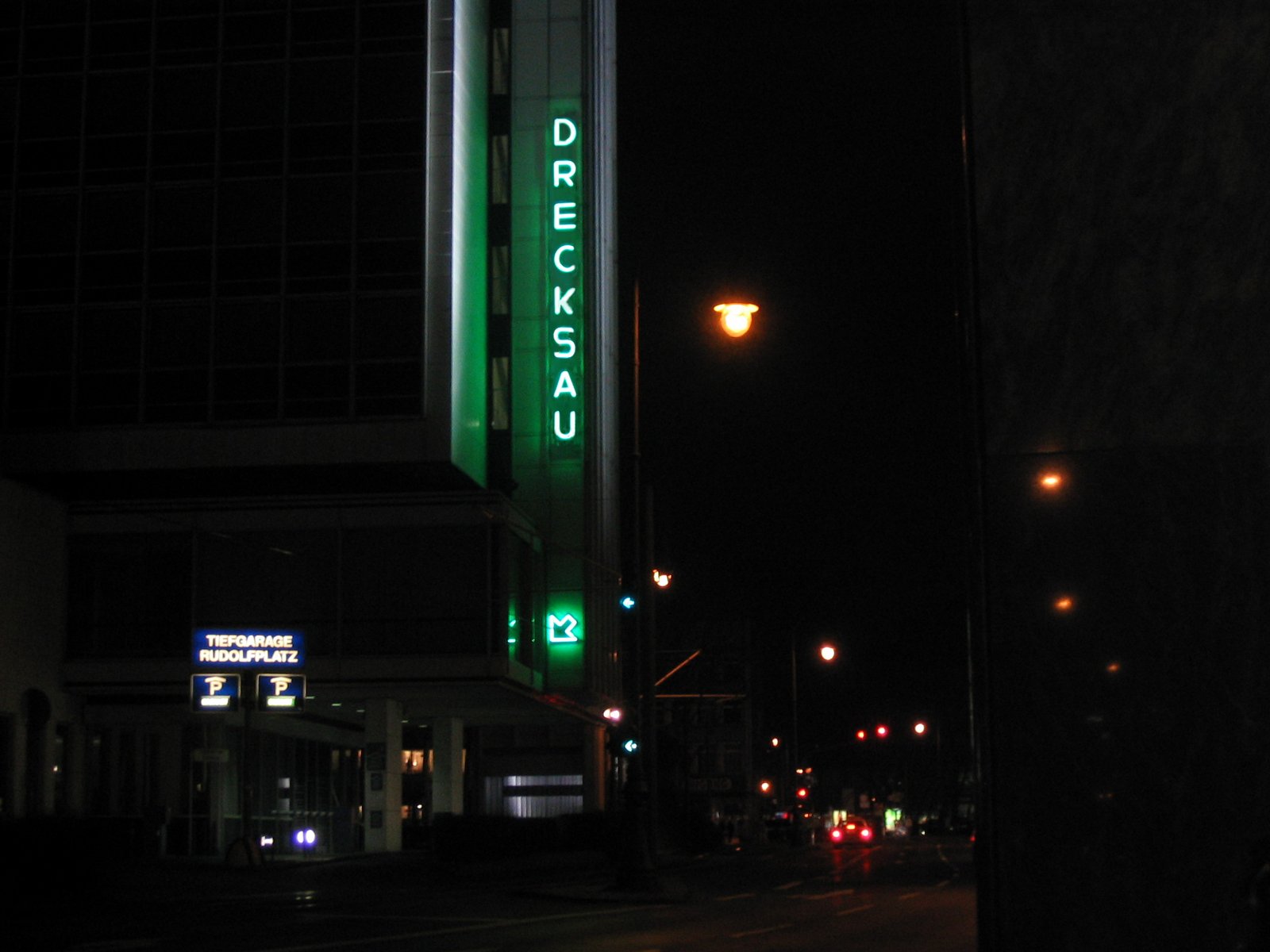
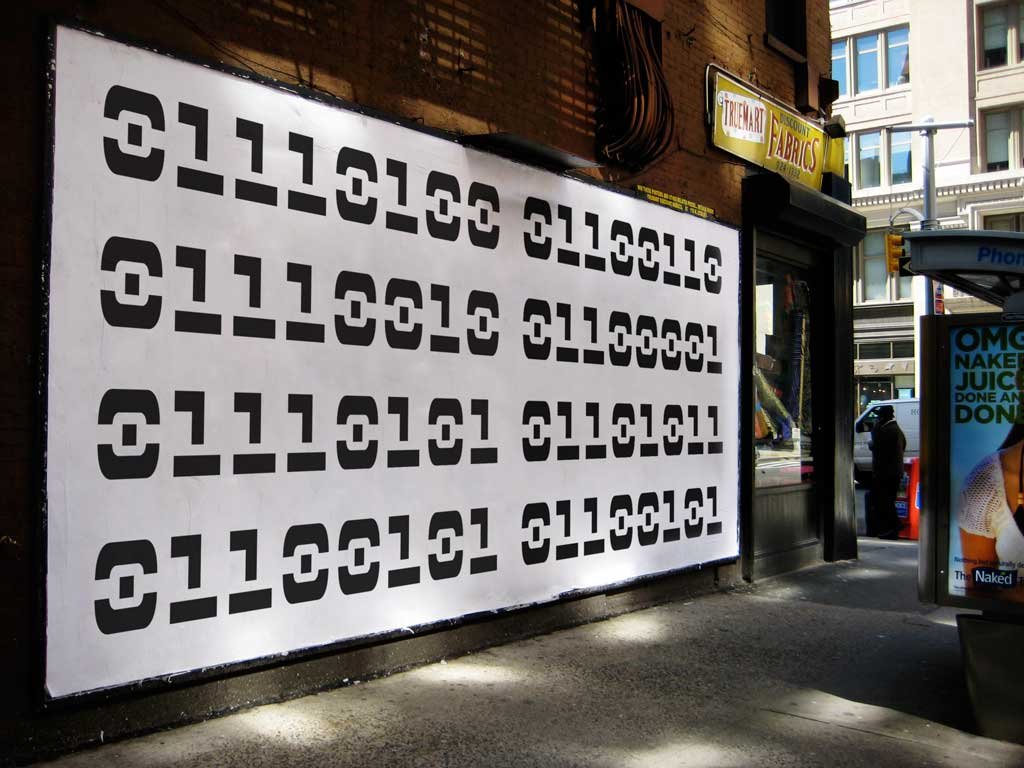
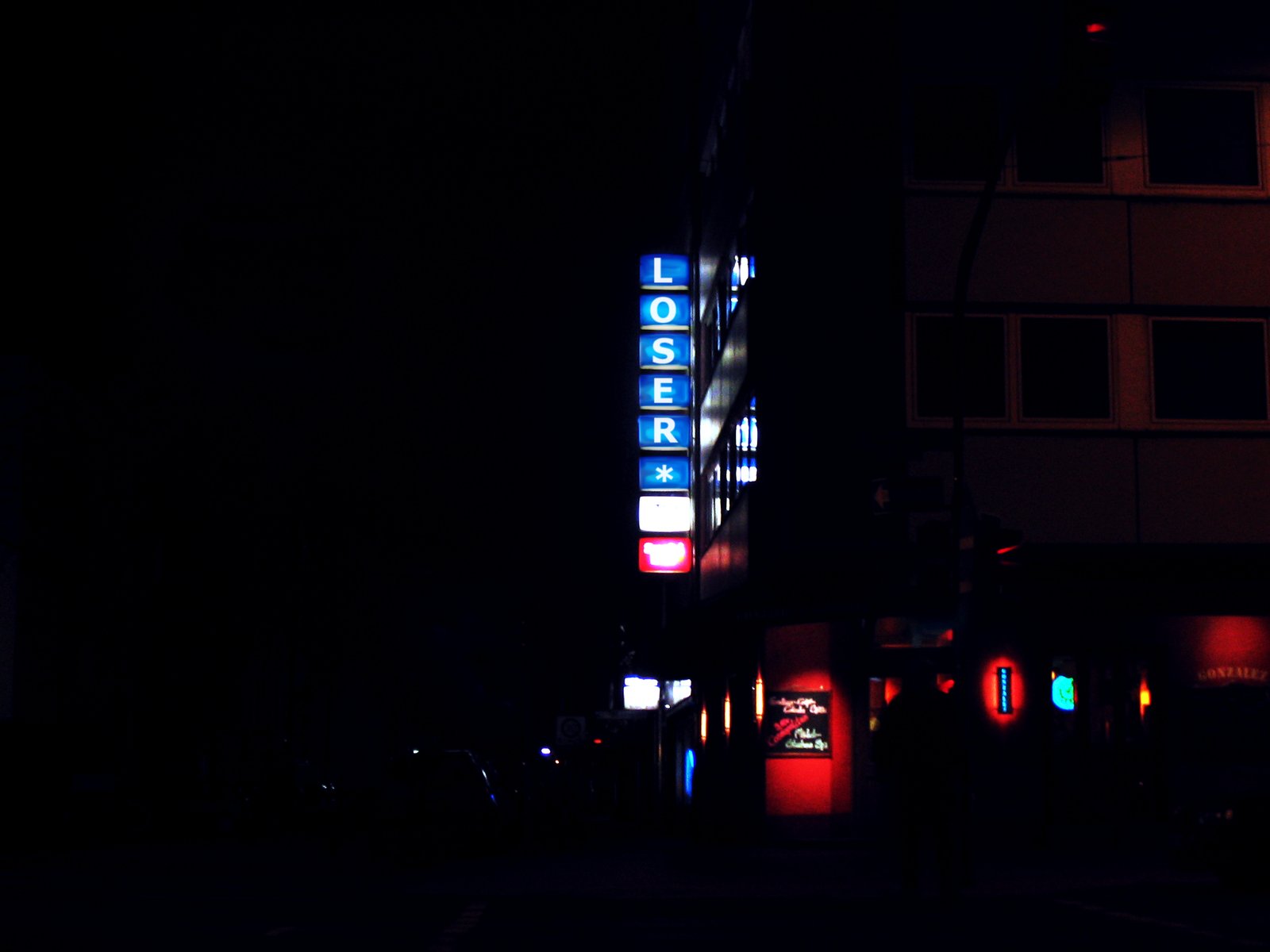
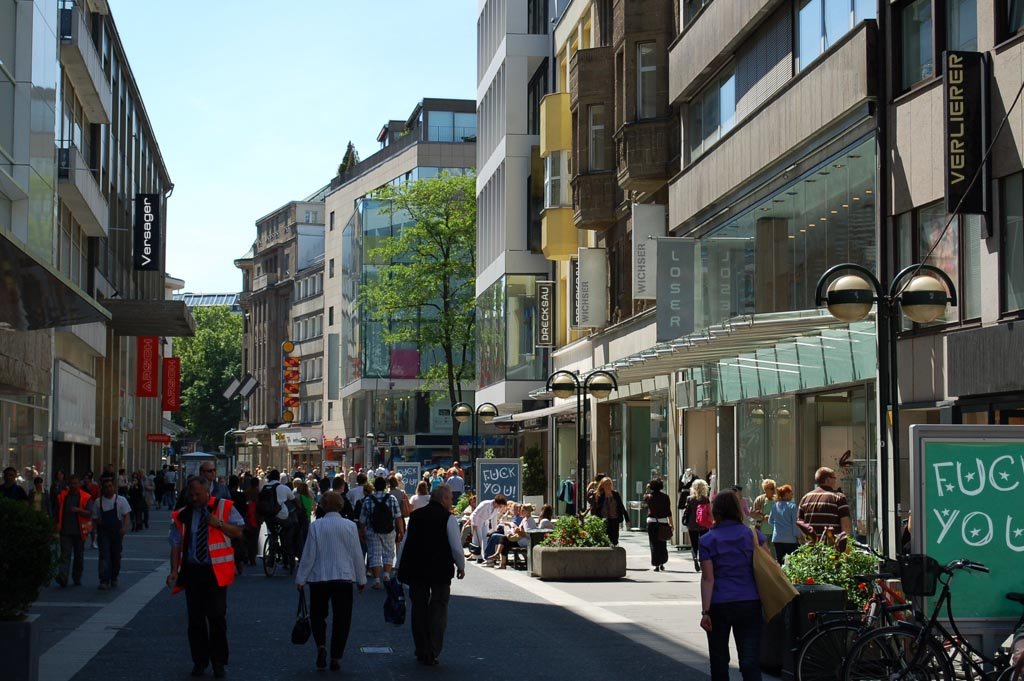
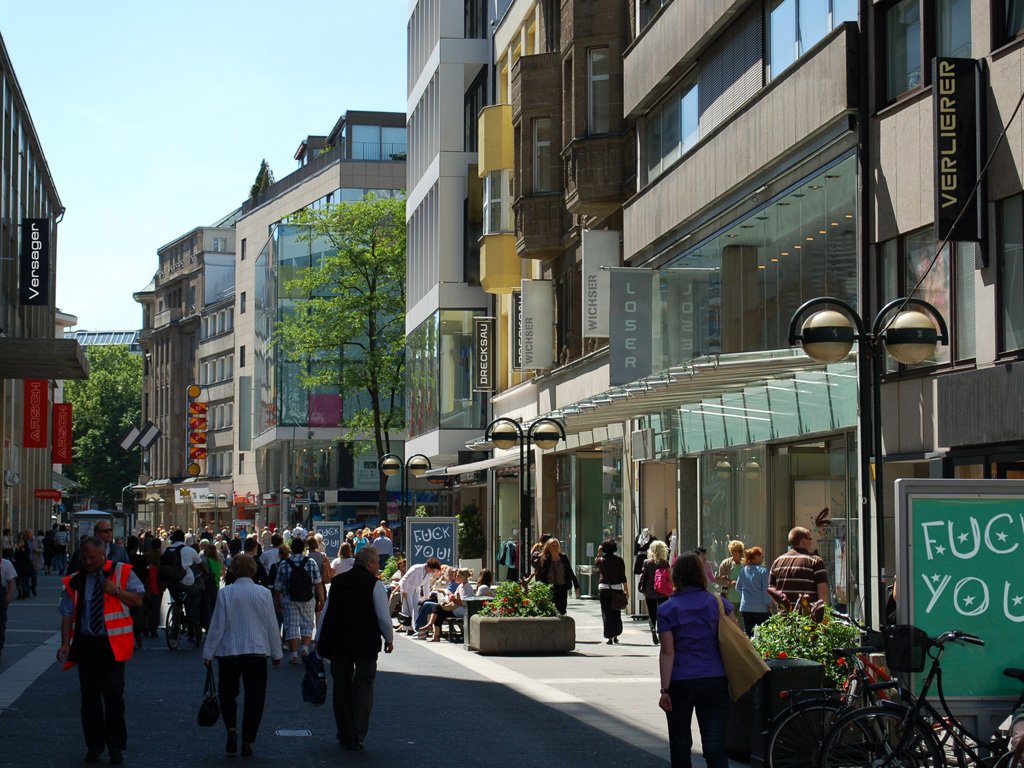
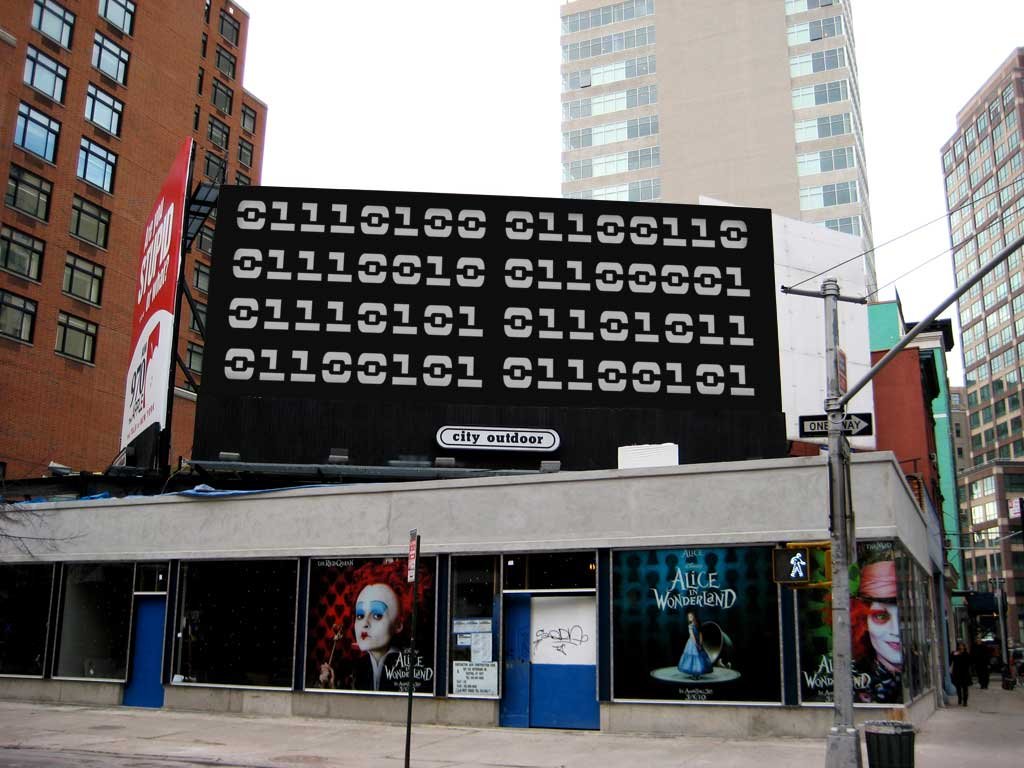
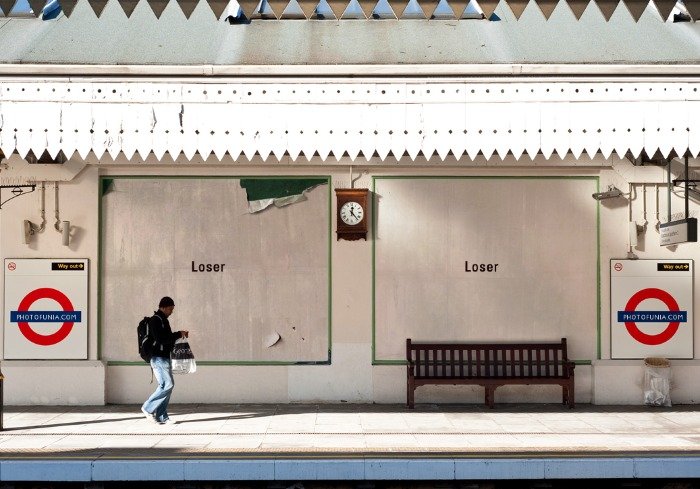
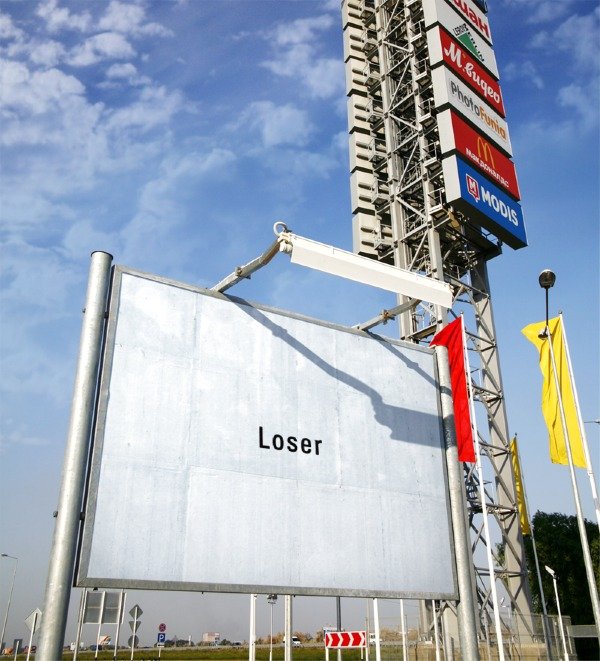
die neue ehrlichkeit is a single operation carried across many places. Into the photograph of a shopping street, a mall, Times Square, a word or a sign is set that appears in exactly the typography of the brands around it and says the opposite of what they say. The shop signs of Cologne's Hauptstraße become arschloch and asshole; a billboard fills with binary code; an empty billboard carries a single quiet loser. The advertising surface is not destroyed, it is reoccupied: the language of consumption stays, its sign flips.
The honesty of the title is this — to say out loud what the surface keeps quiet. The insult is addressed at once to the passer-by, the consumer, the city, and, over the bank, to the viewer and the artist himself. From Cologne to New York to Bangkok the gesture works without translation, because the surface of consumption has become the same everywhere. Where the spectacle keeps renewing the surface that covers the banal, these works simply name it: the honest sign among the dishonest ones.
Over the years around the financial crisis the same operation moves off the street and into the market's own language. The slogan of the good customer is carried into Second Life as a demonstration; the chart and the analyst's presentation are rebuilt until their confidence turns absurd; the artist puts on the costume of the global business leader; and a satirical blog keeps up a daily fire of montages against the banks. The chapters below gather these registers — the street, the market, the office, the feed — under one roof: the honesty of naming what the surface of the economy keeps quiet.
the theory · cave goes popculture public space · transprivacy a decade on · freebeer
the words
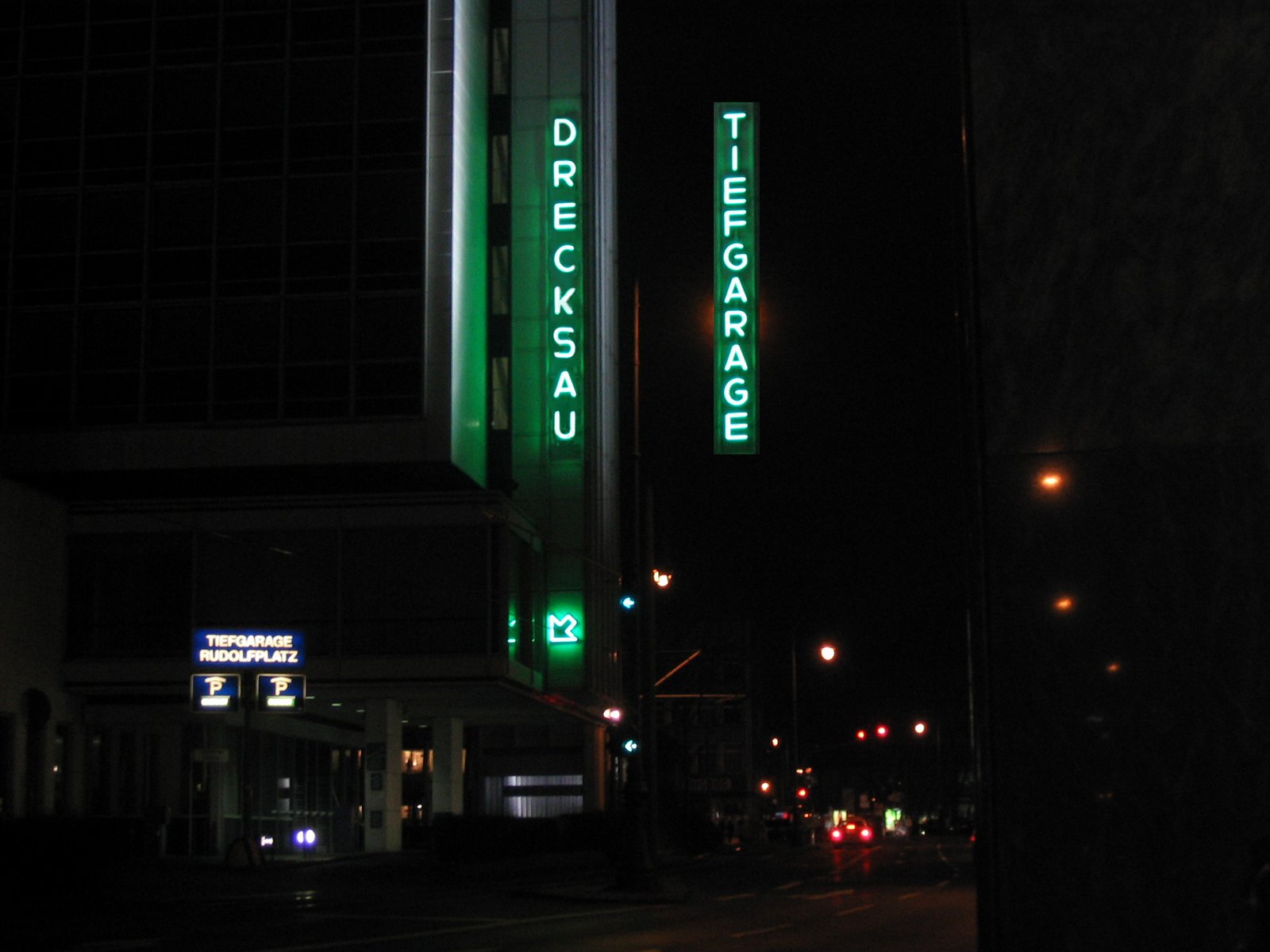
The word that advertising will never choose, set into the surface it belongs to. Sometimes it is an insult worked into the shop signs and billboards, sometimes a night sign in neon, sometimes a screen filled with binary code. The vocabulary travels: Cologne, Düsseldorf, New York, Bangkok.
signs of the exchange
The vocabulary of the market, taken at its word and set out on white. The dollar and the percent sign as monochrome panels — pure signs, after Warhol; and the full tausch · ware · handel series, twelve pictograms in which the cycle of the commodity is written as a deadpan equation. Currency, animal, machine, house, currency: the elements are interchangeable, and that is the point. Everything trades for everything, and the sign is all that remains.


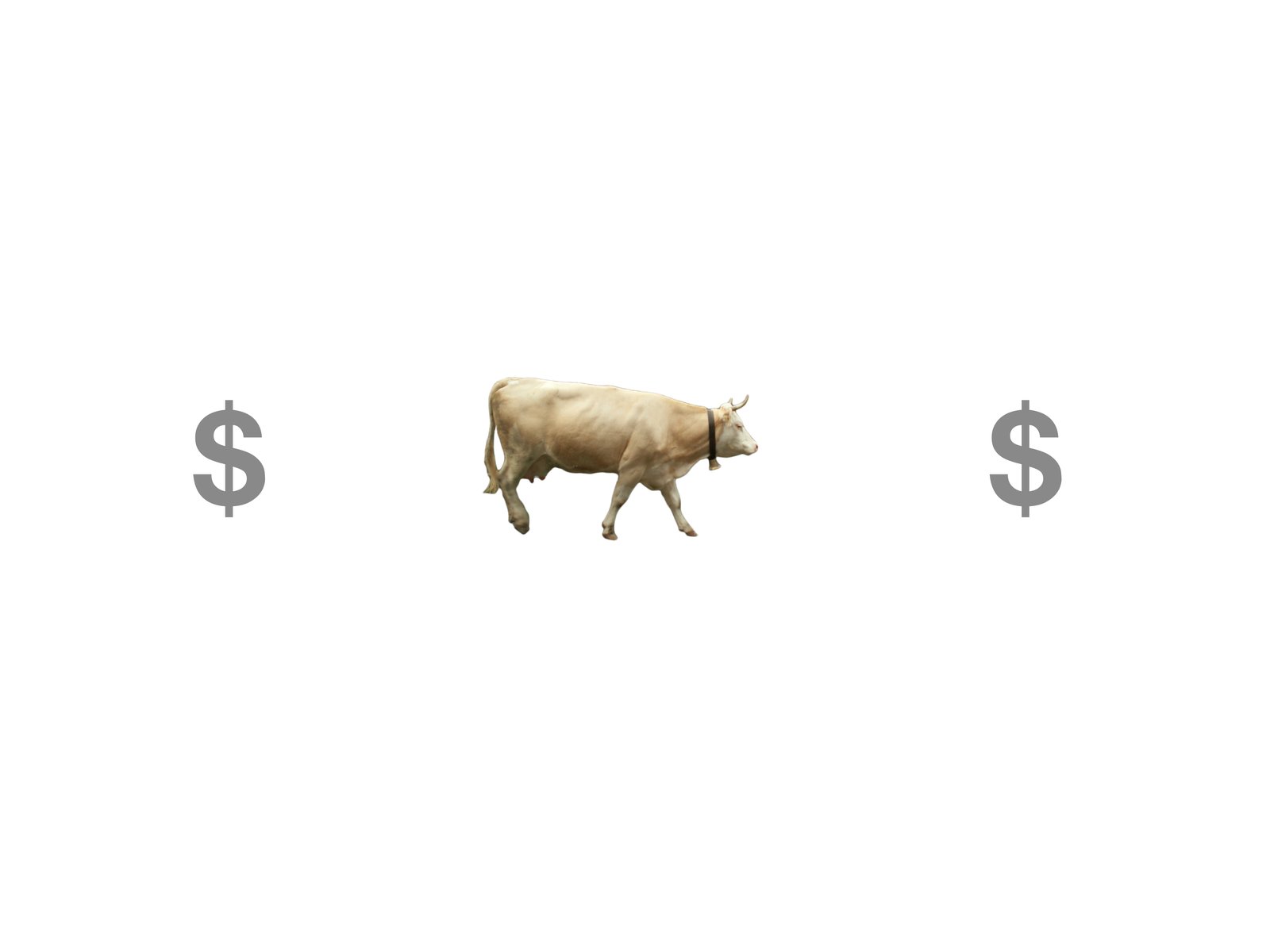
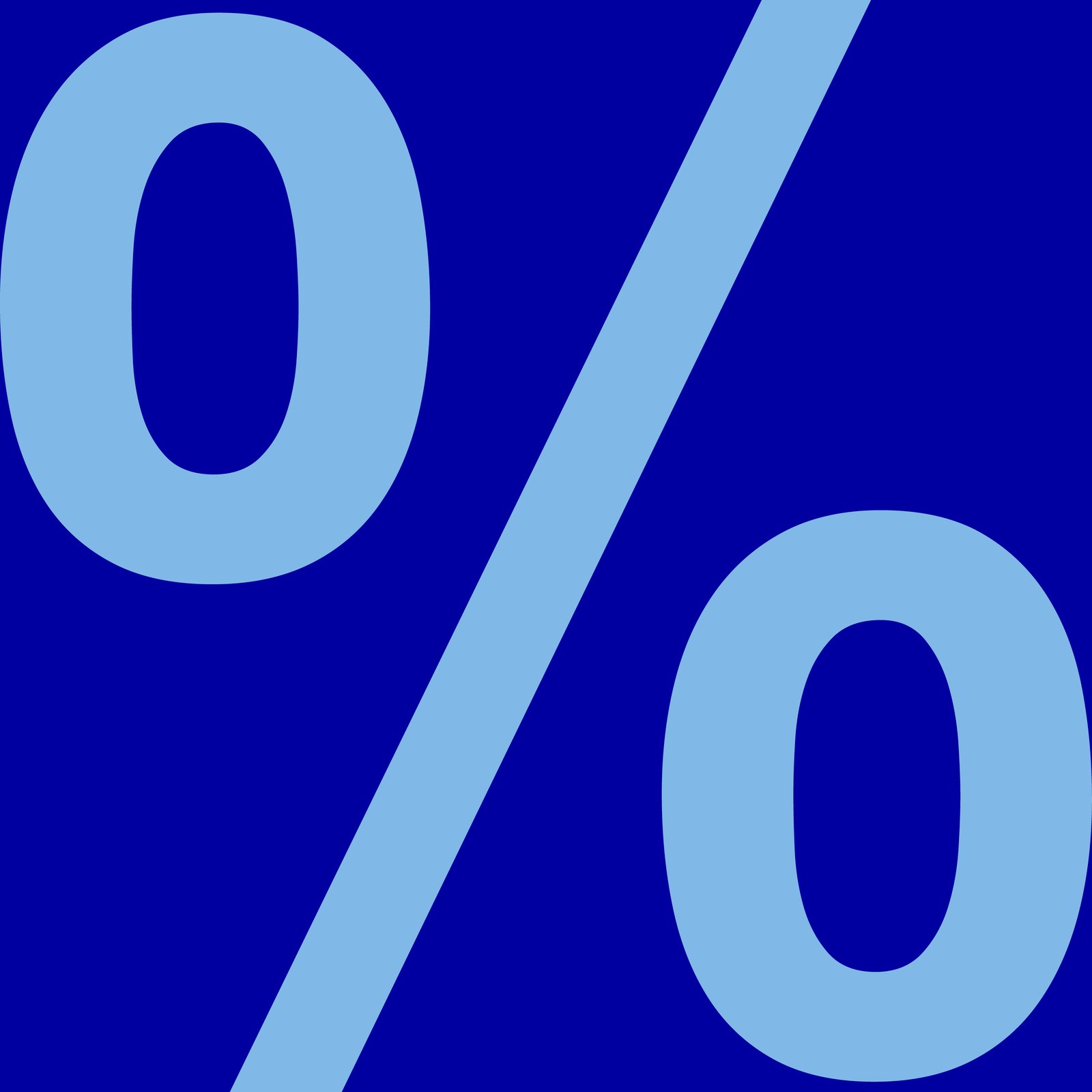

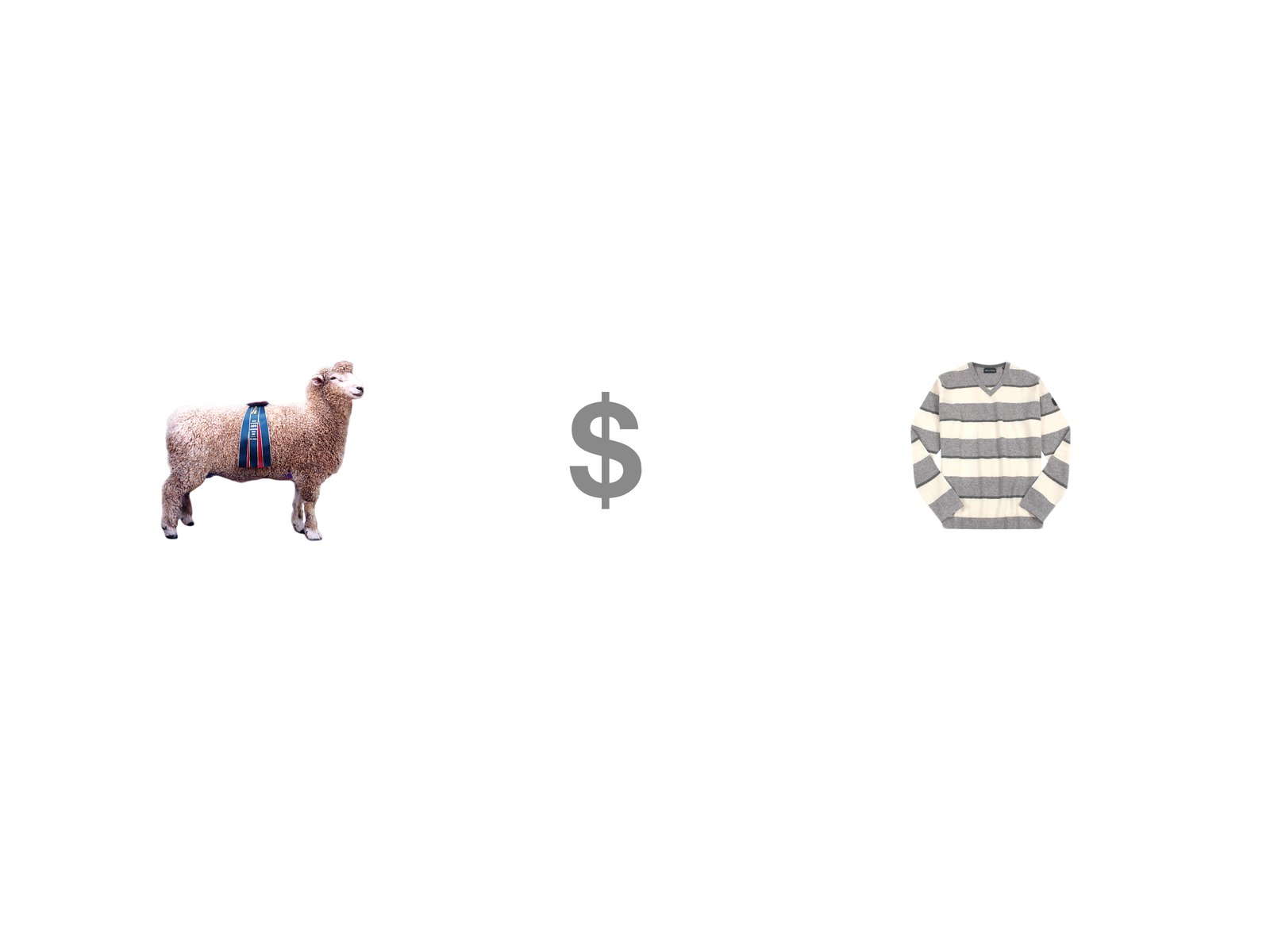


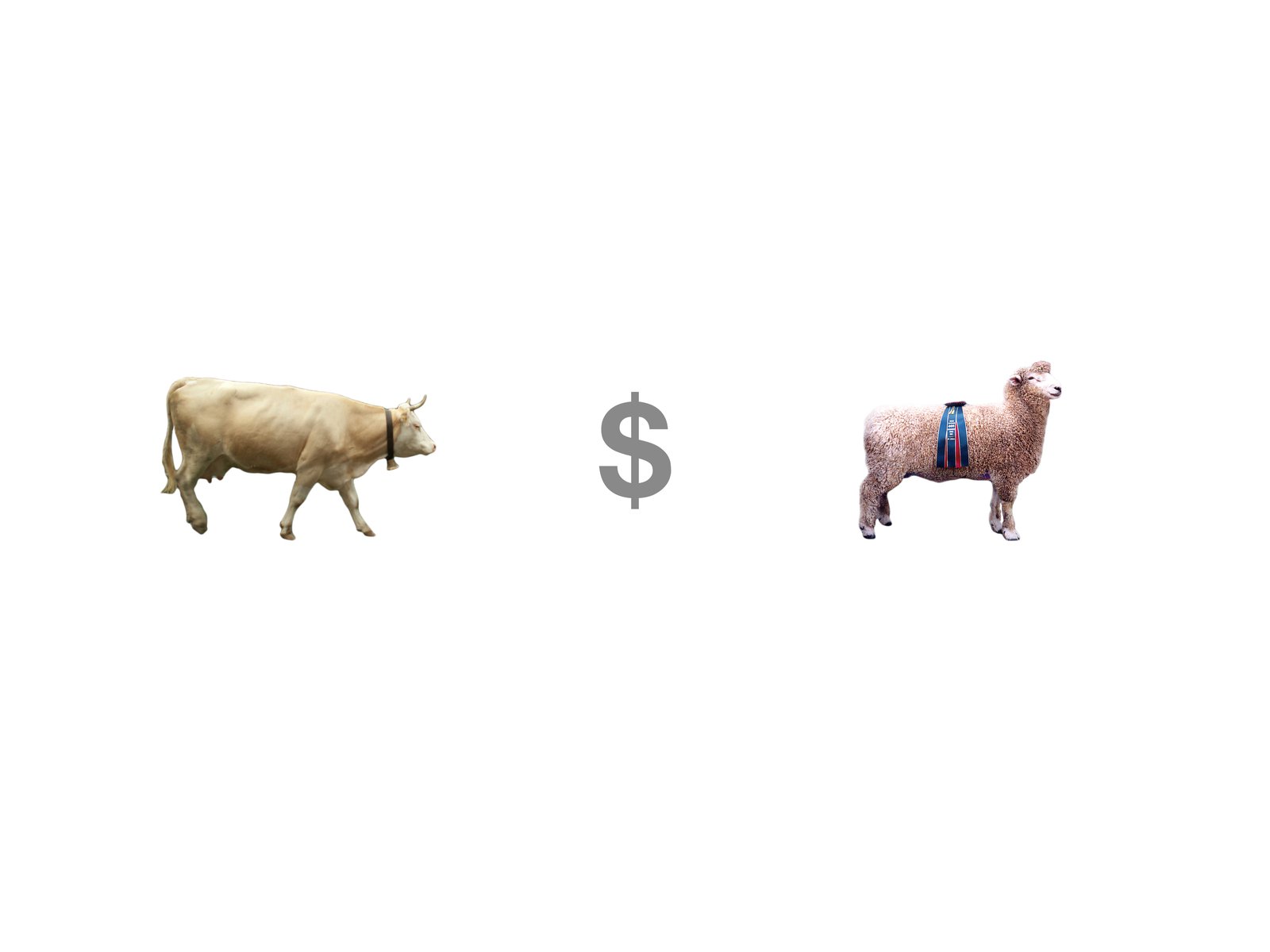
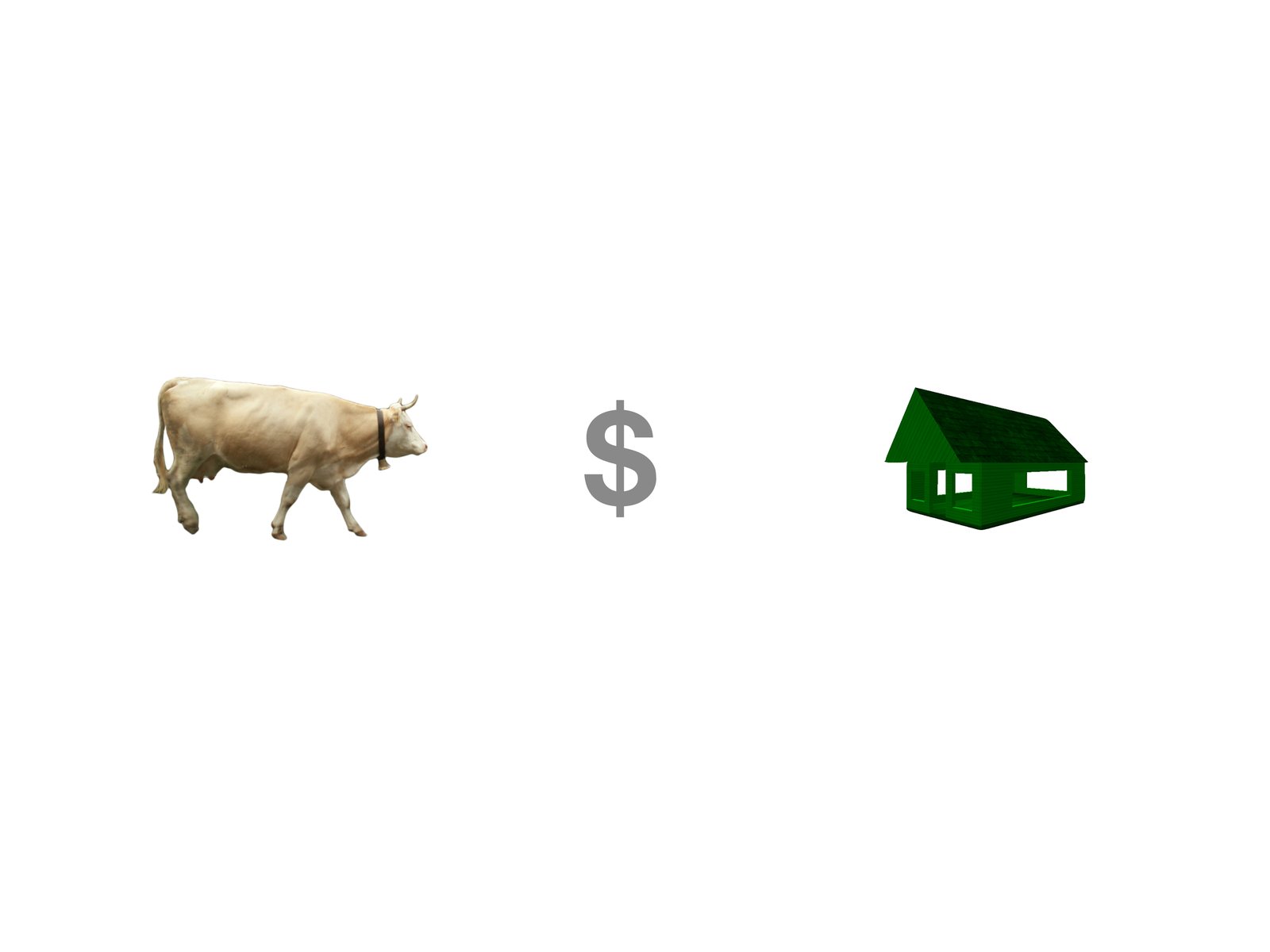
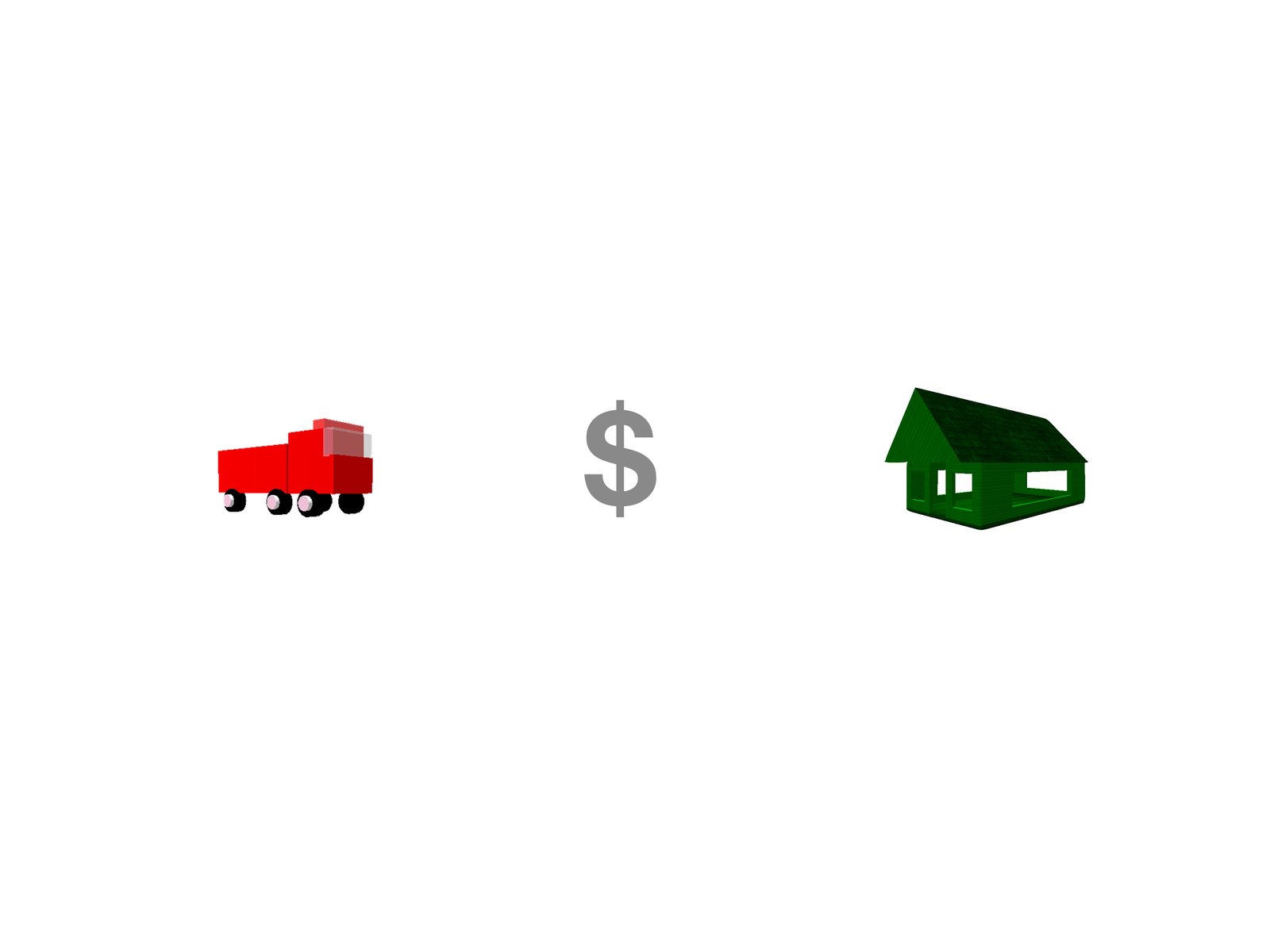
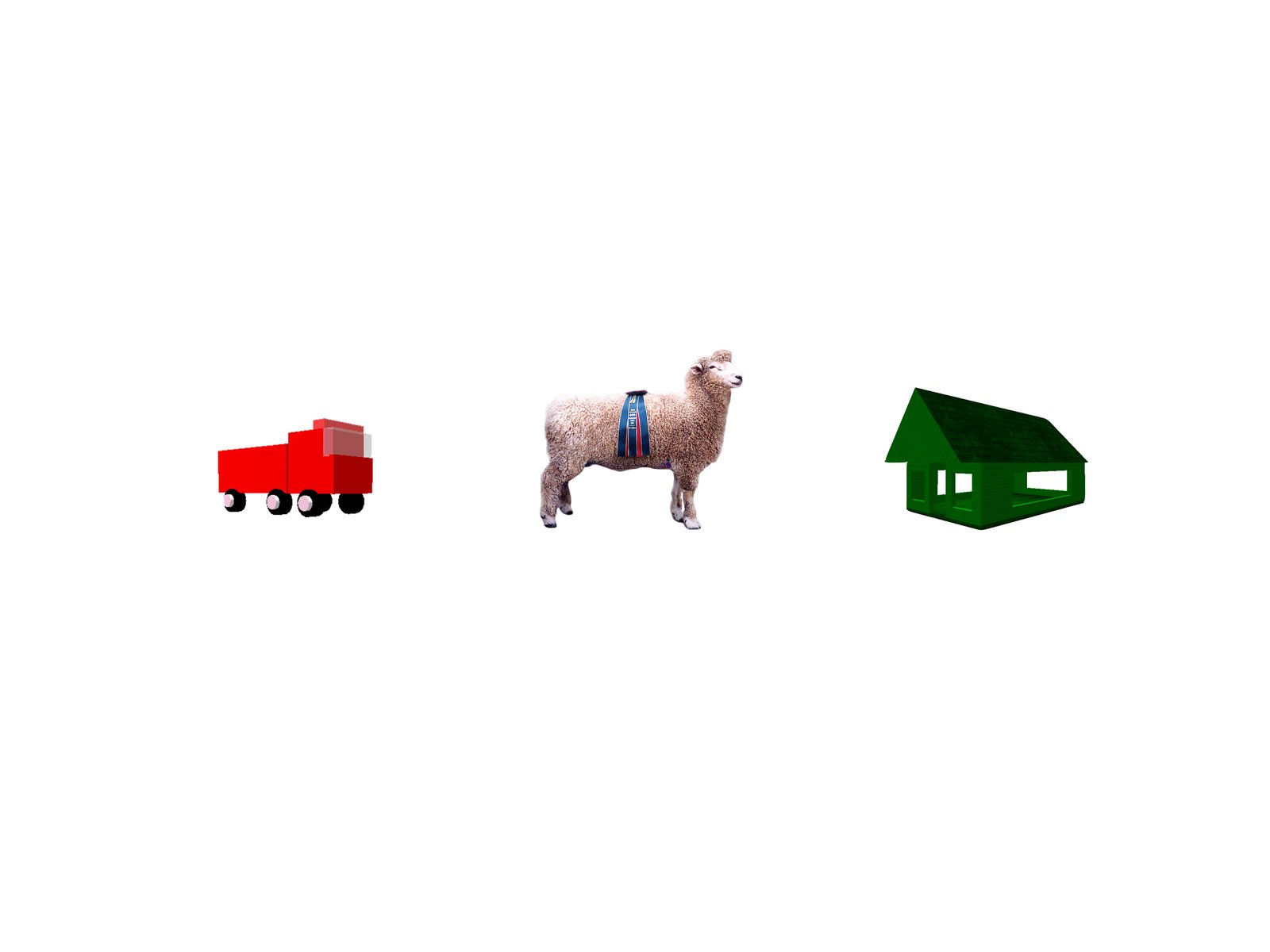
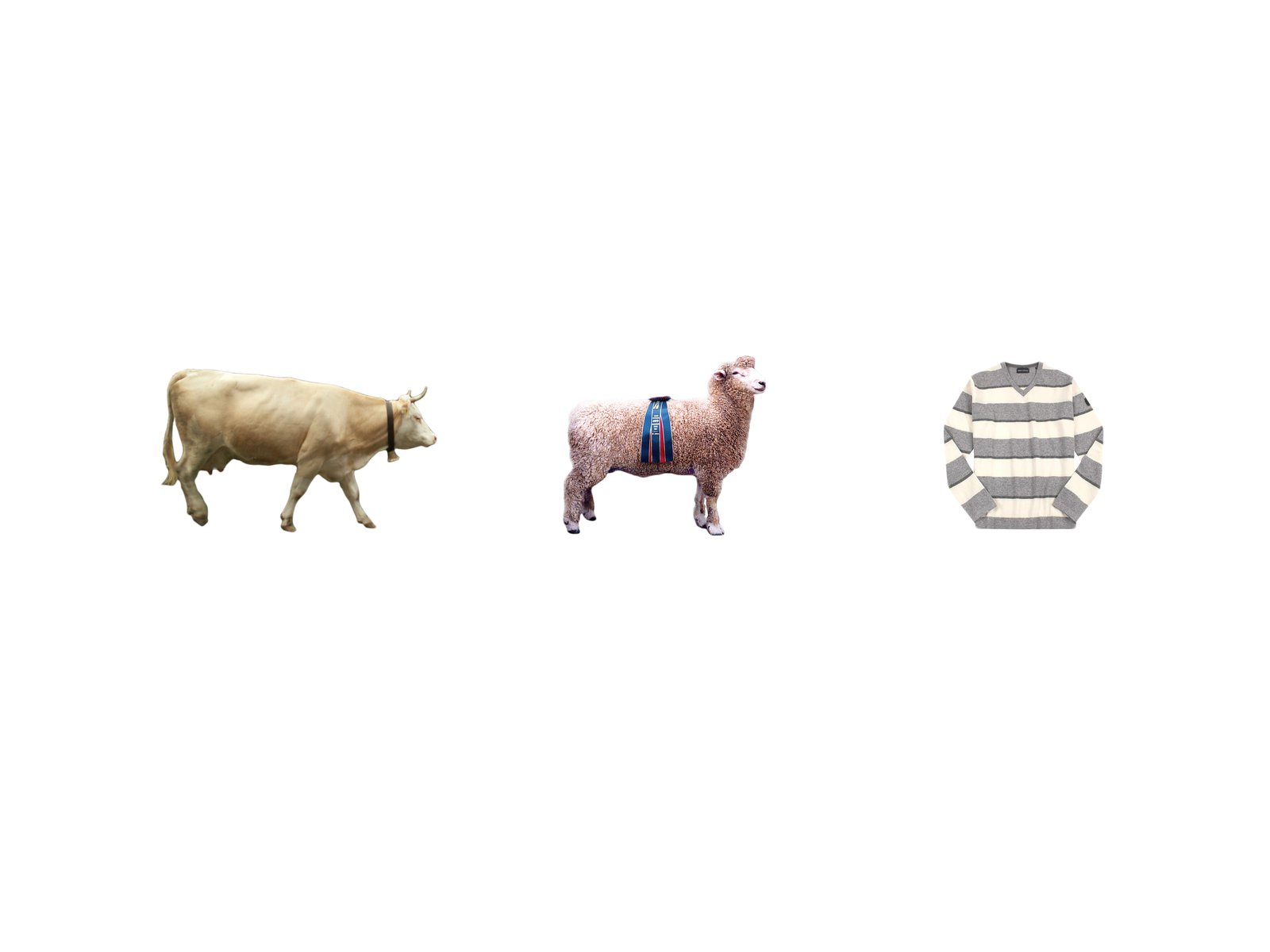
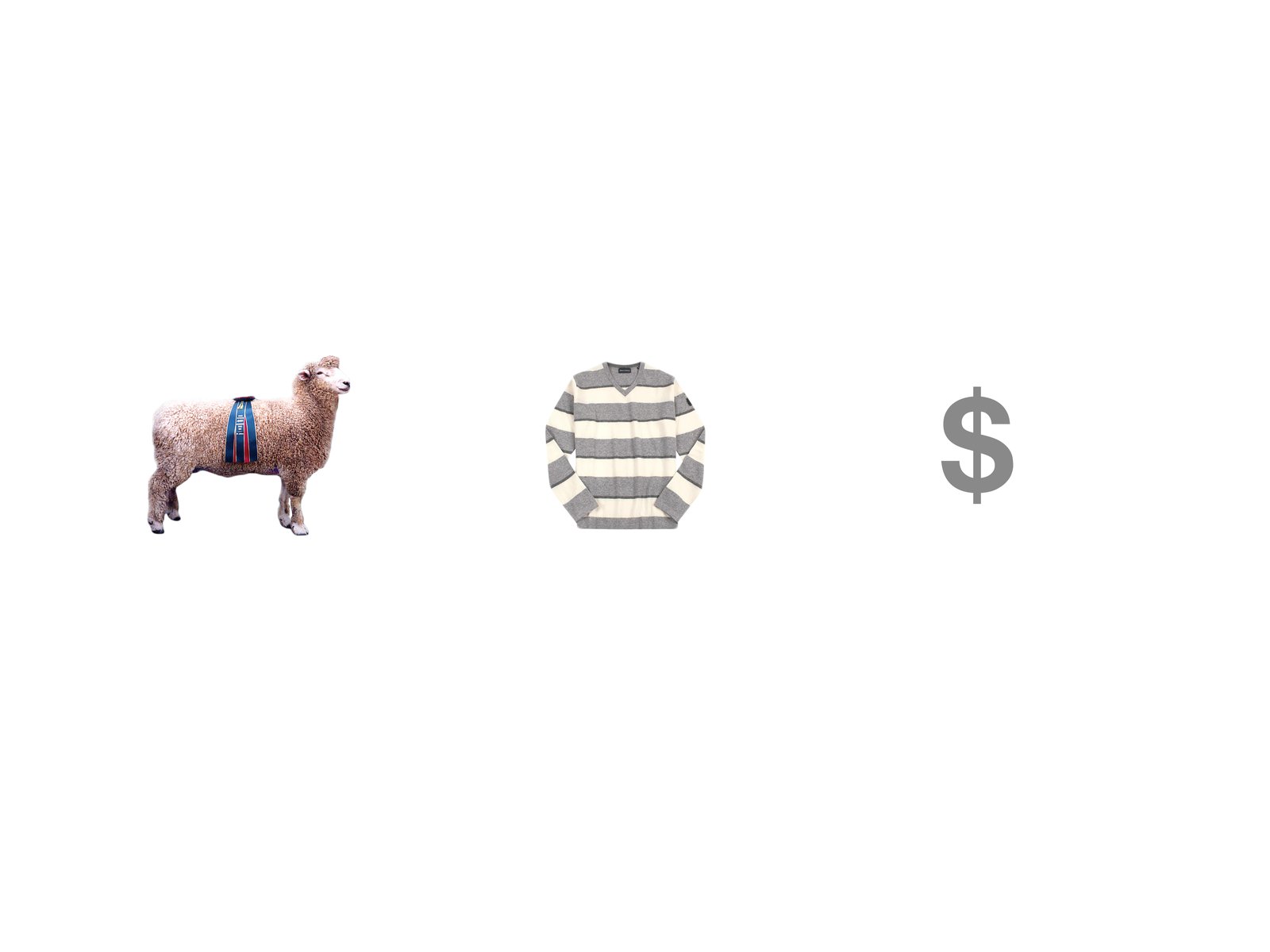
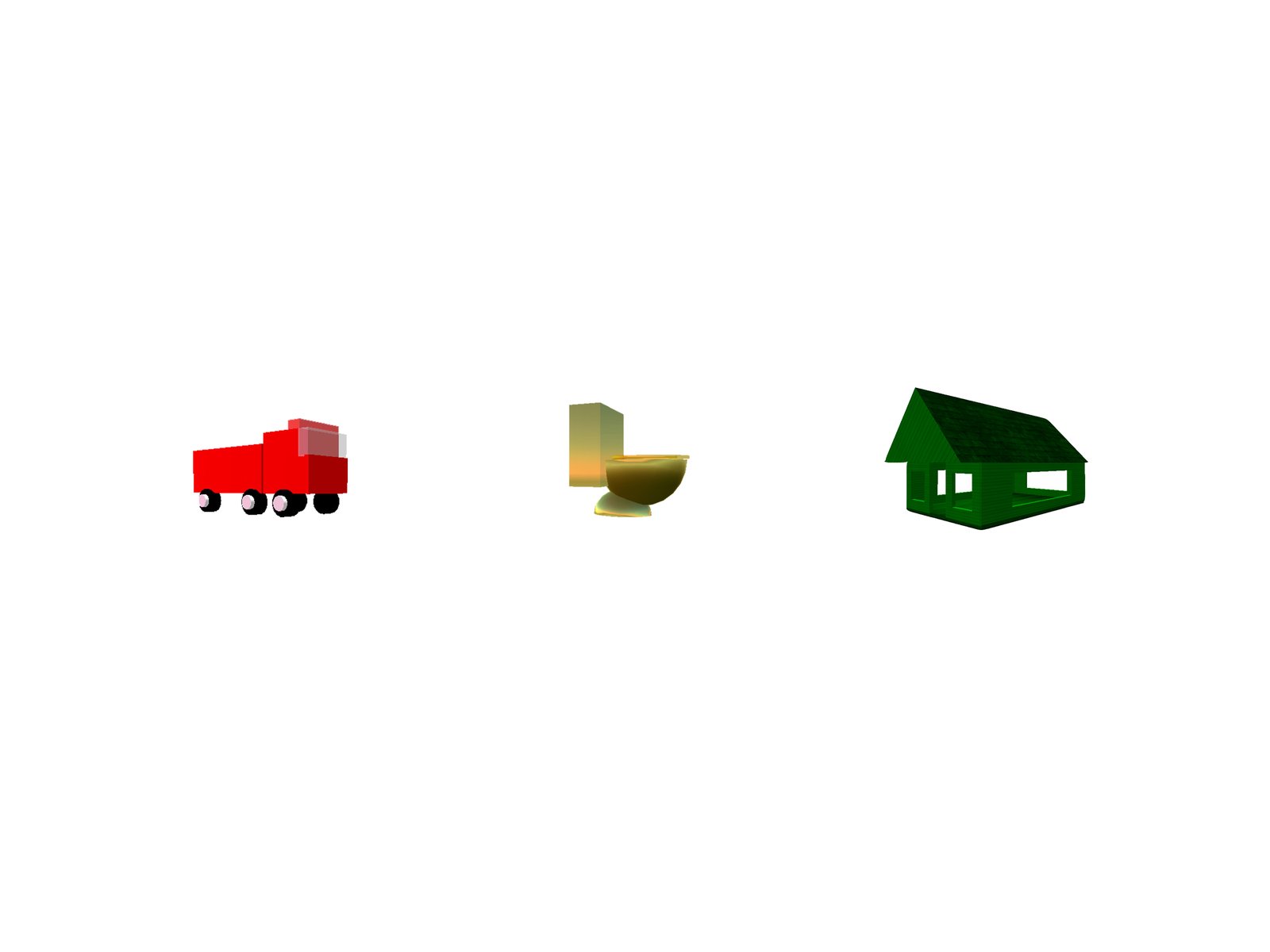
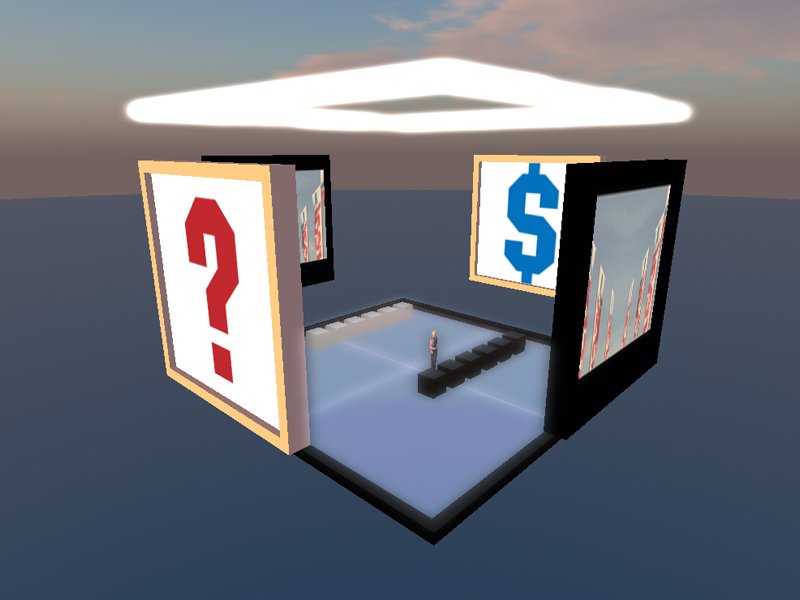
The same two signs return years later in Second Life: on syntheticreality.com (2010) the dollar and the question mark hang as framed panels in a gallery floating in the virtual sky — the signs of the exchange, moved into the hybrid space.
the honest poster
The same honesty in two more registers. A poster in the plain voice of corporate affirmation — "der verbraucher wünscht, ein sehr guter kunde zu sein" (the consumer wishes to be a very good customer) — and, translated into the object, the throne nobody can sit on: power built as a chair of jagged shards, with no seat to take.
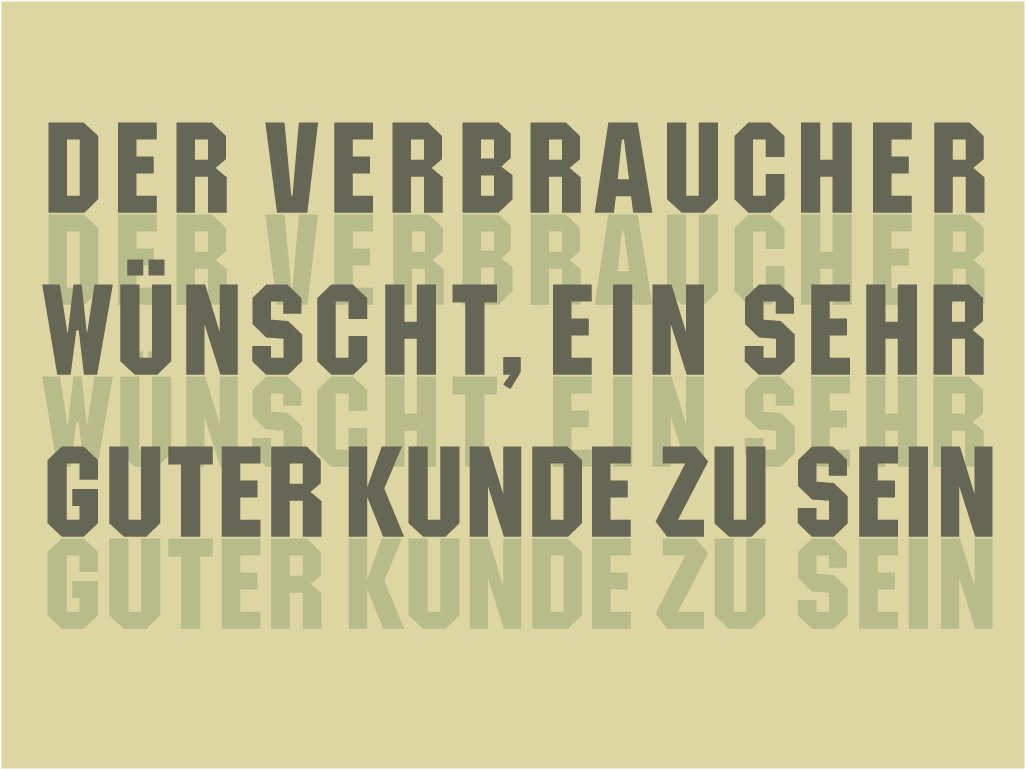
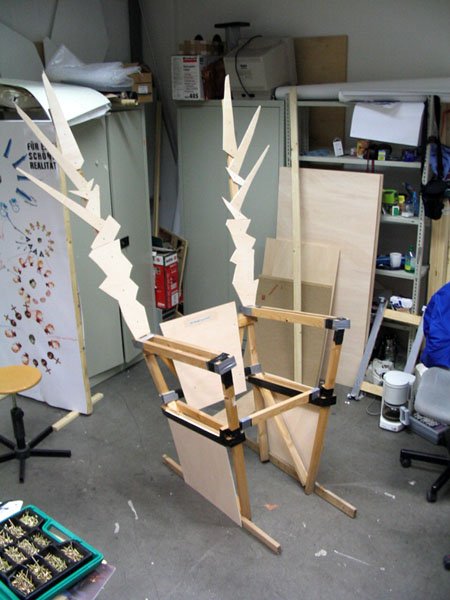

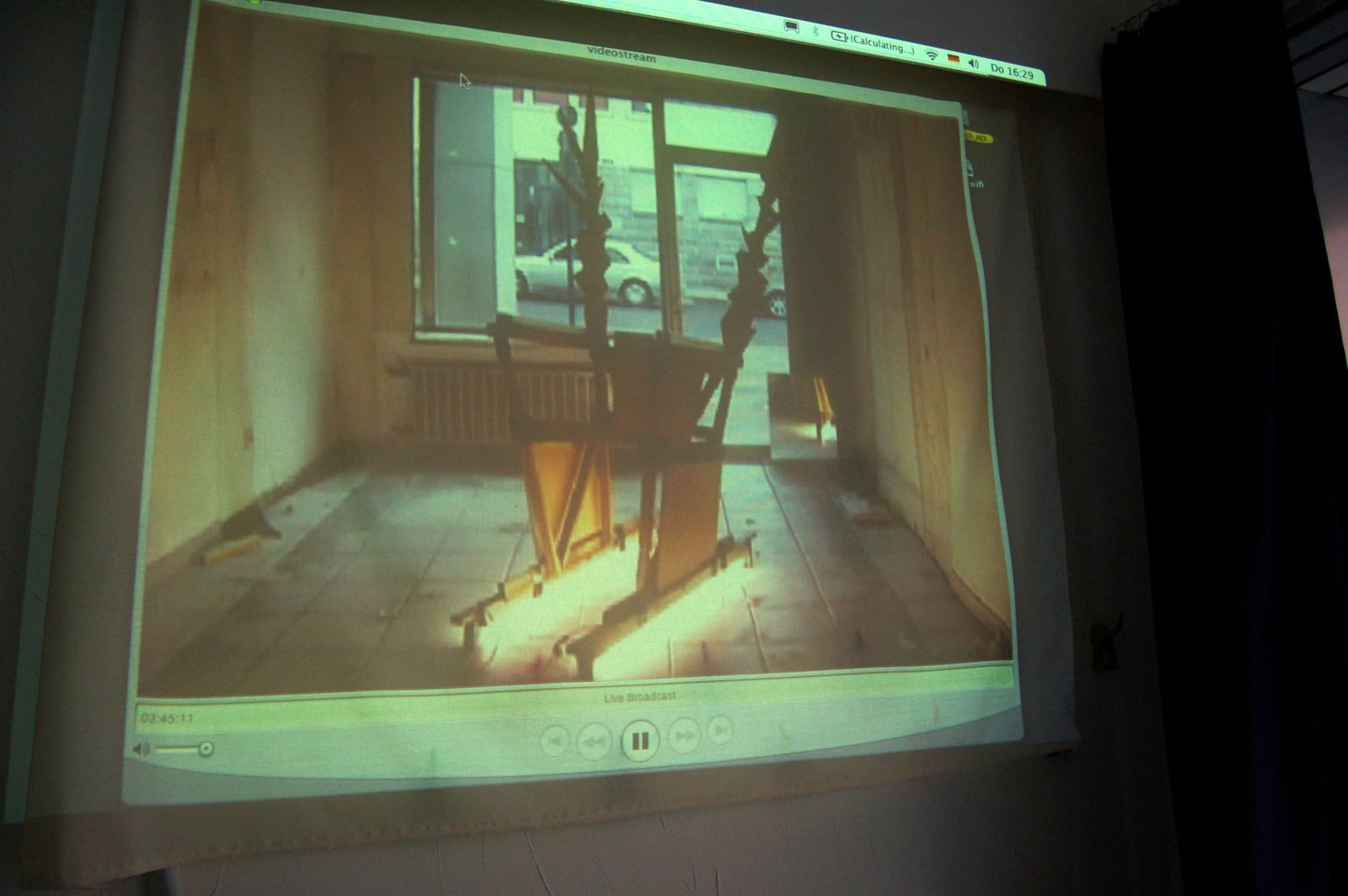
from left to right
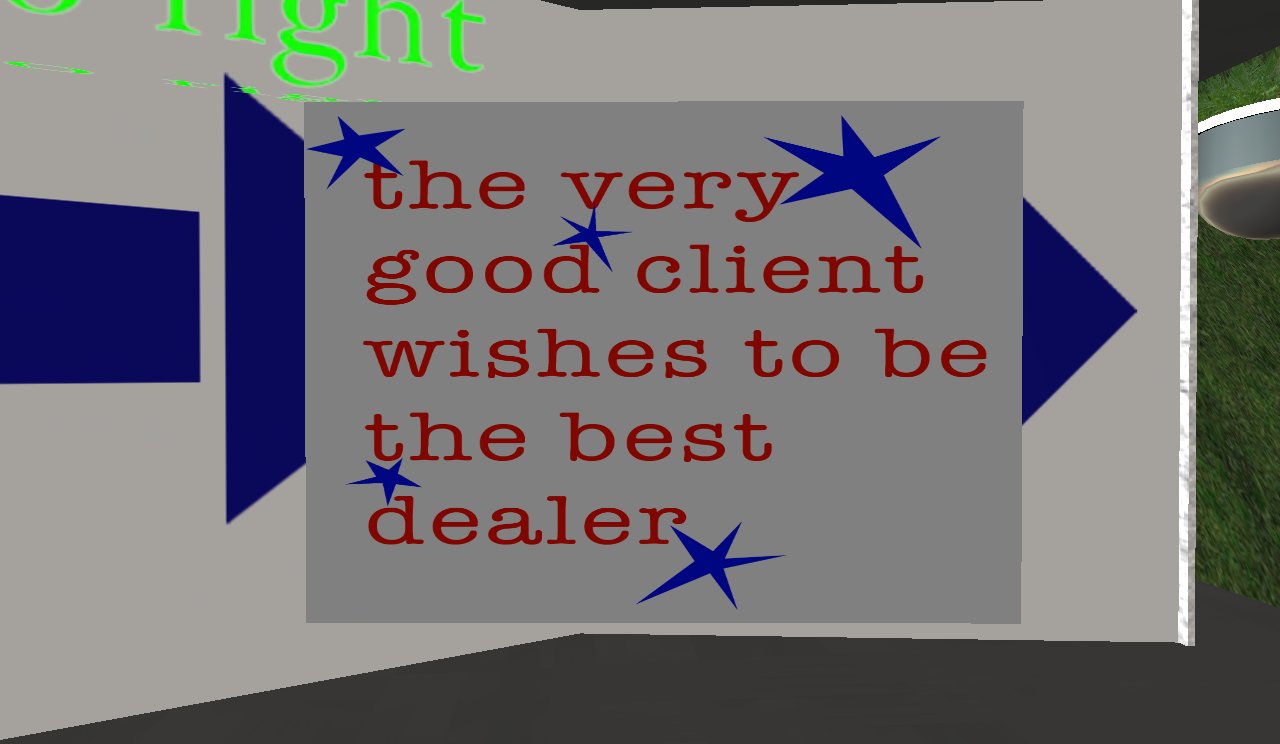
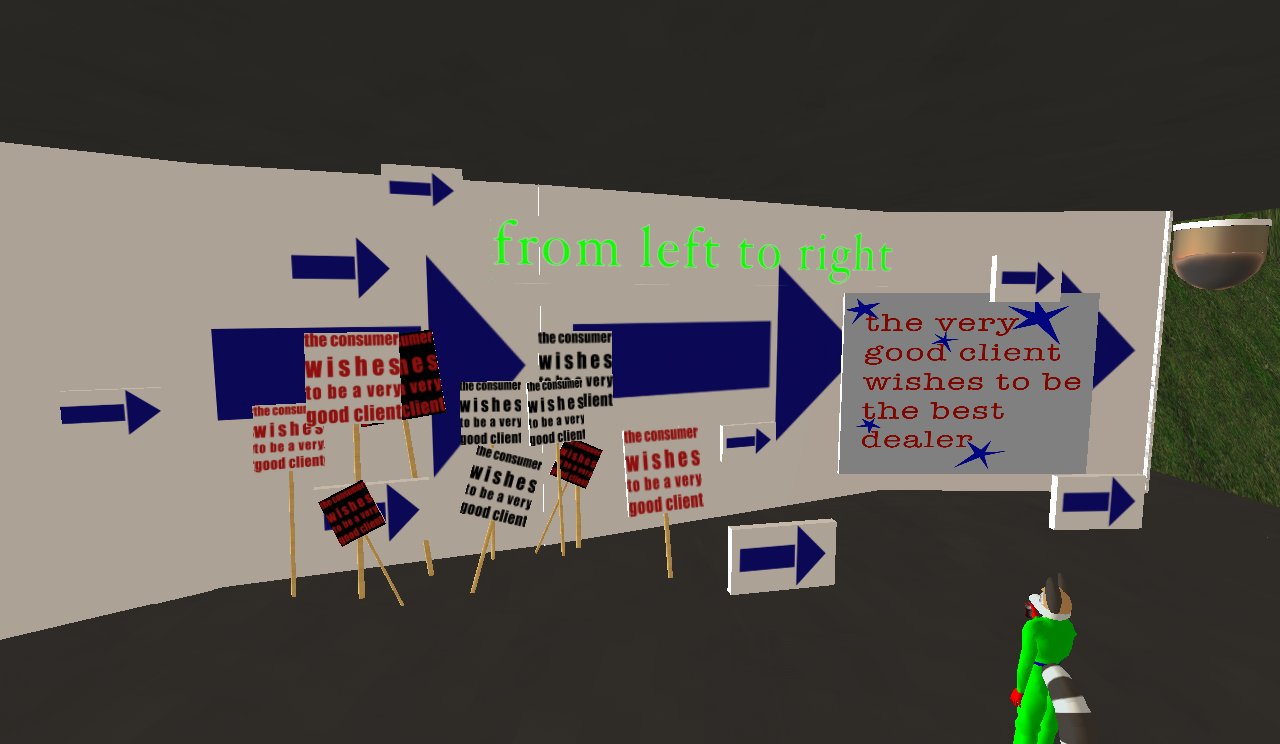
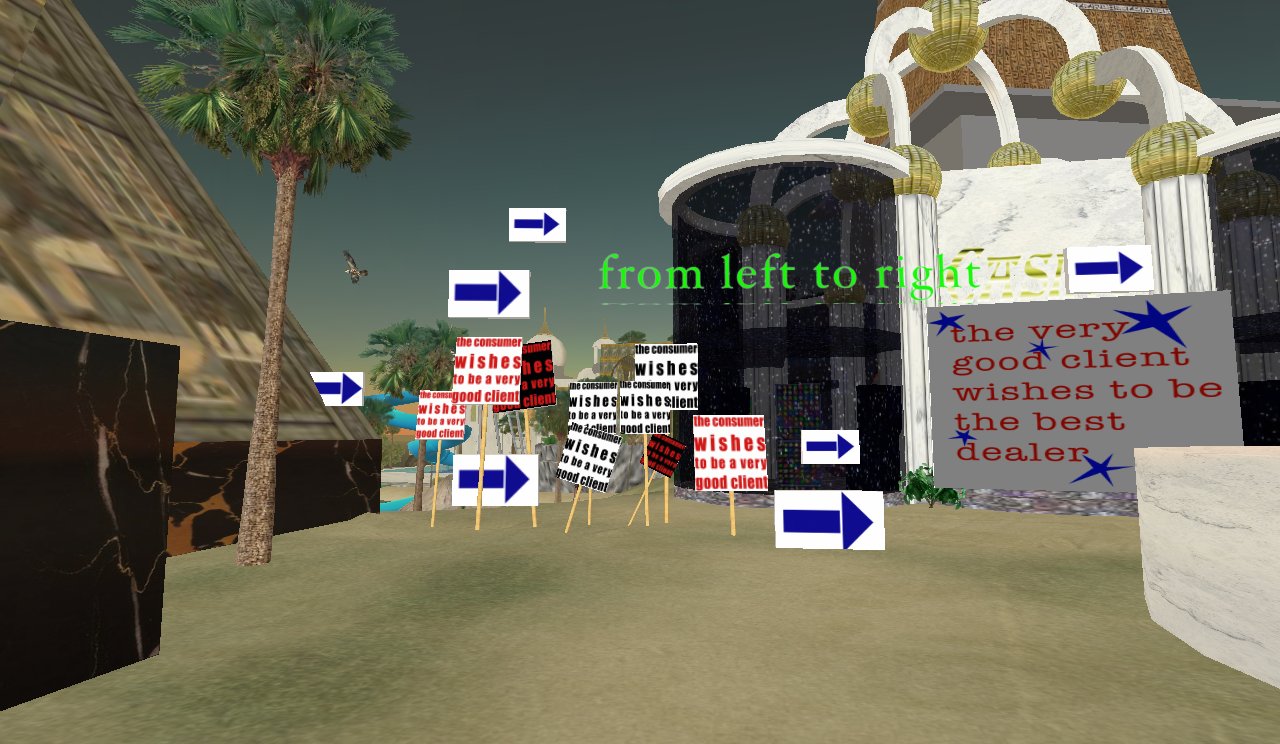
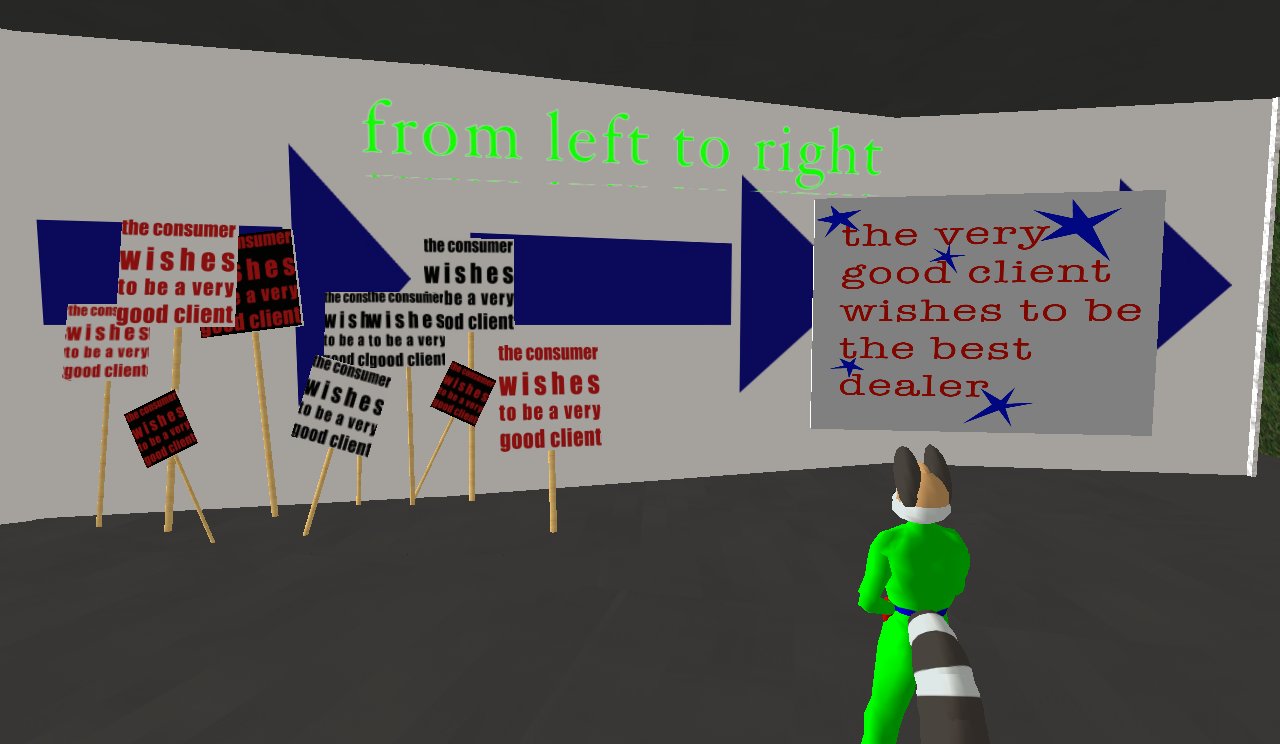
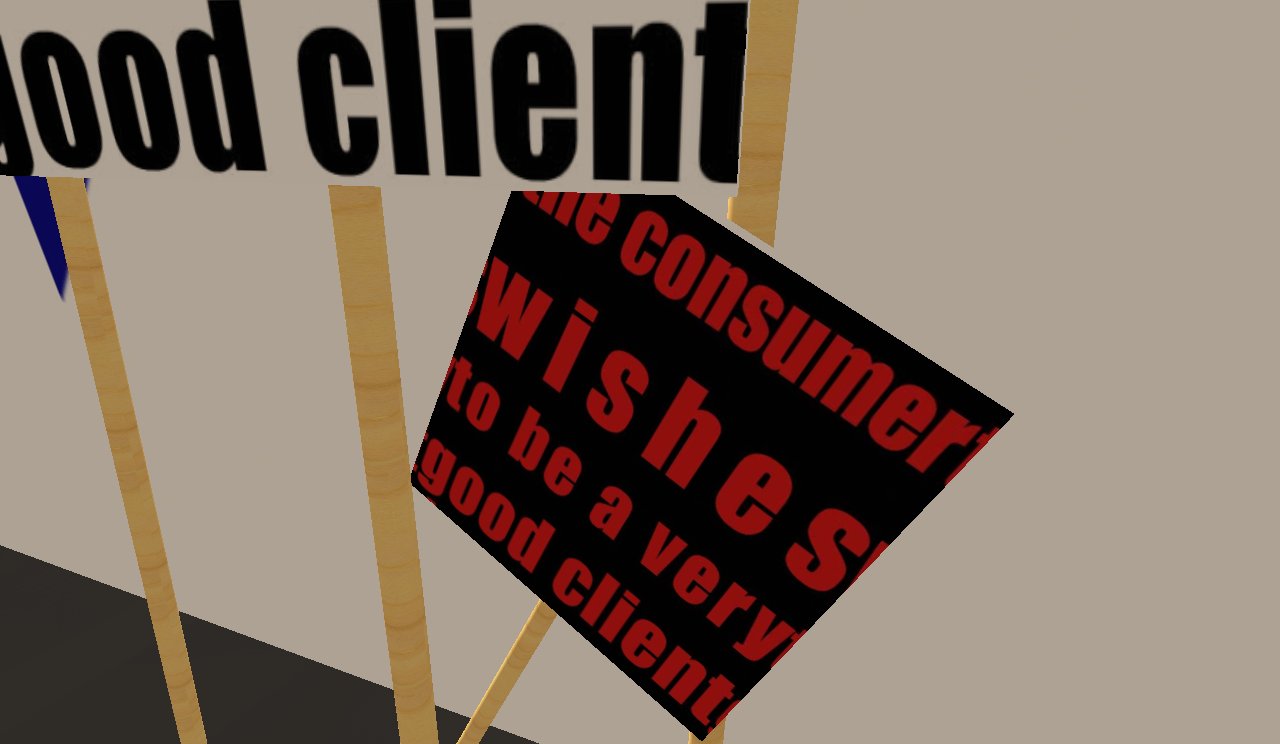
The good-customer slogan goes virtual. In Second Life (2007) the sentence becomes a demonstration: hand-painted placards on wooden stakes read "the consumer wishes to be a very good client", and big blue arrows march them, from left to right, toward a final board — "the very good client wishes to be the best dealer." The protest form is borrowed and emptied; the escalation from consumer to client to dealer is the whole argument. It is the honest poster again, staged as a rally in a virtual mall.
charts and presentations
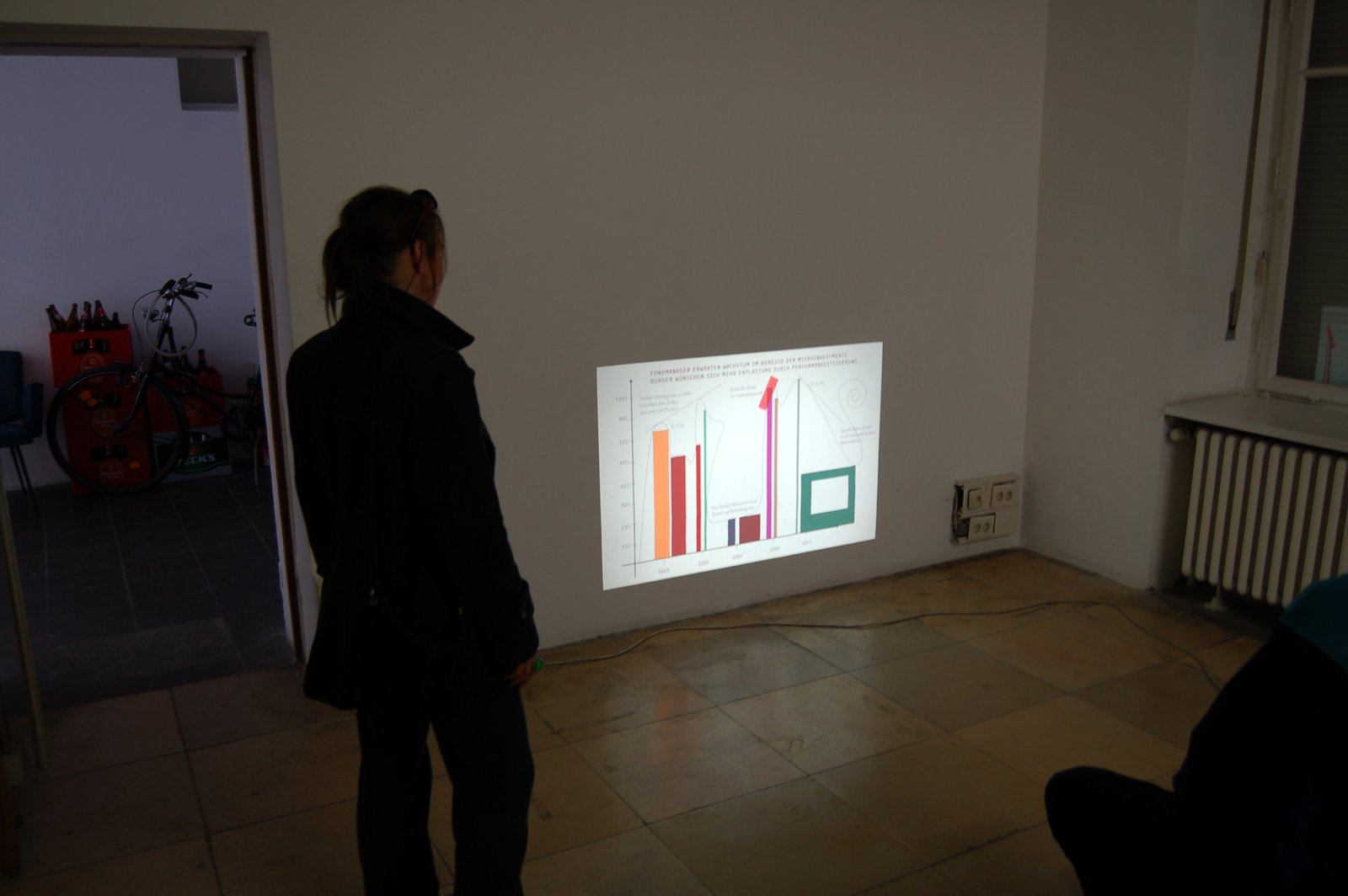
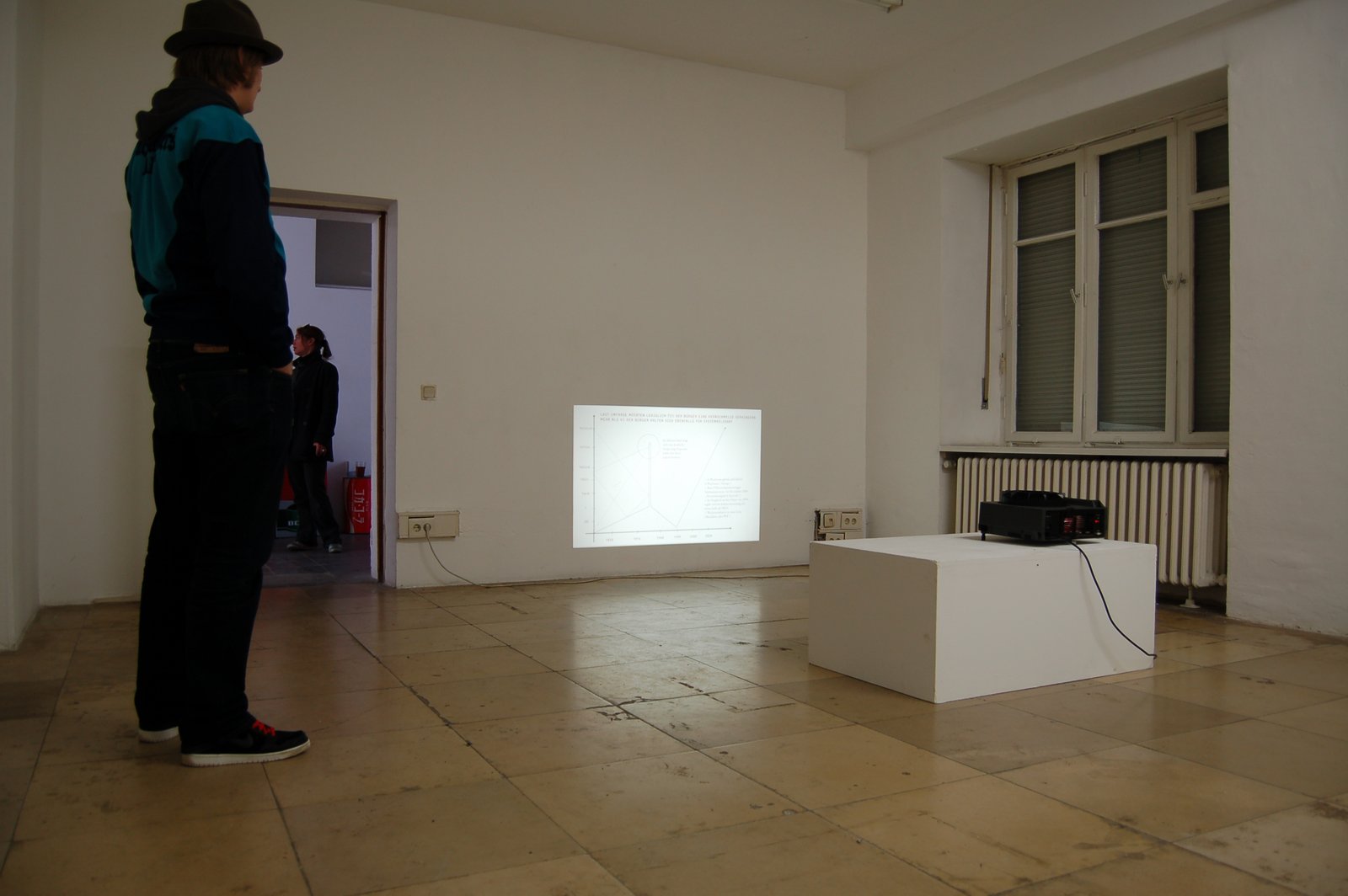
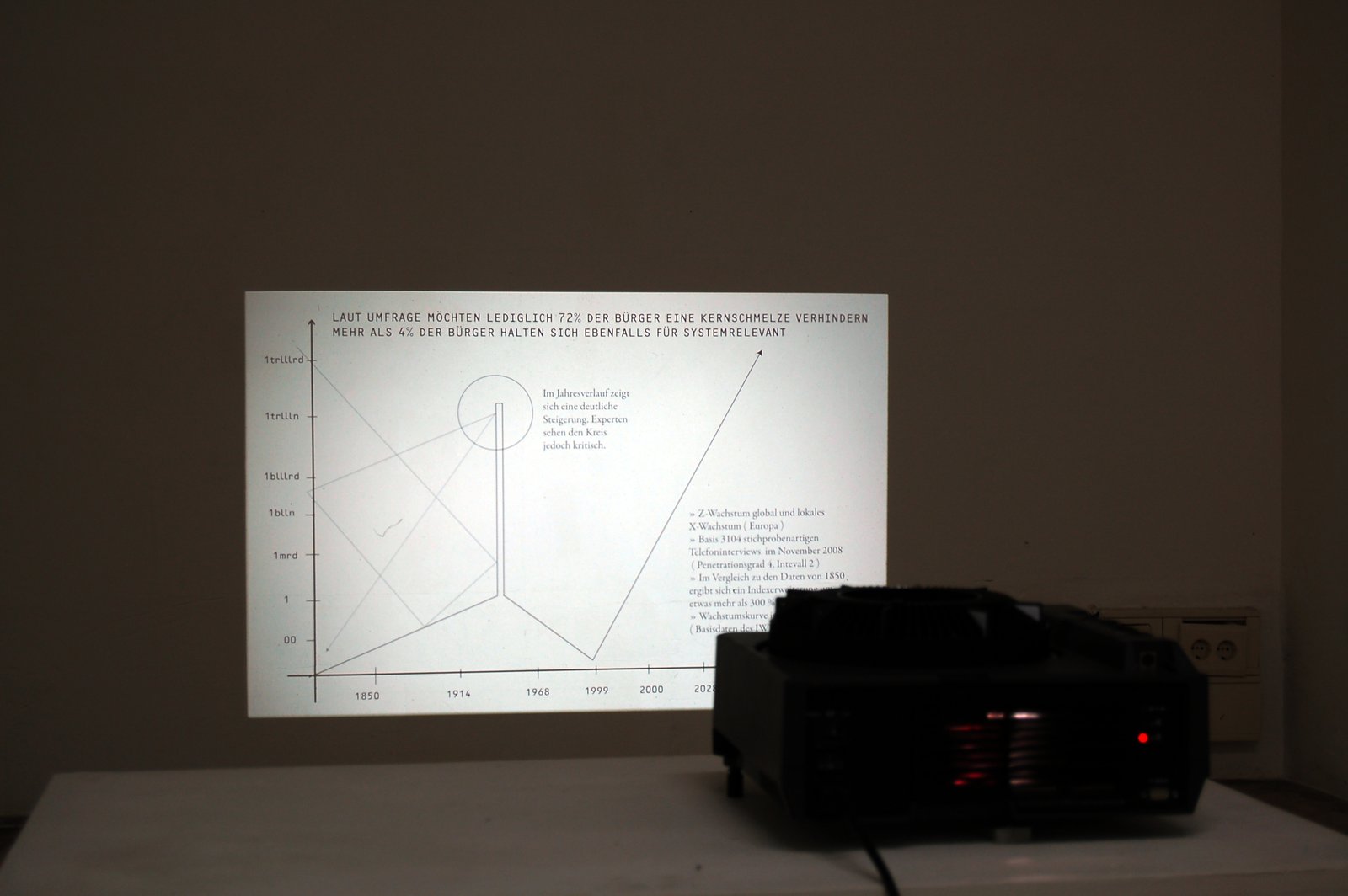
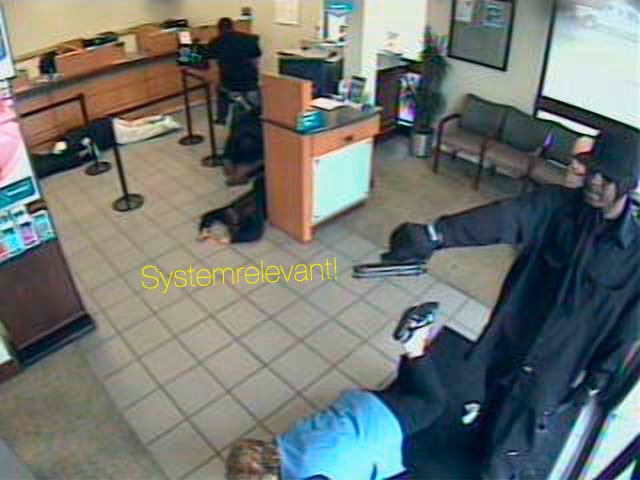
A series from the crisis years (2008–2010) in the deadpan visual language of the analyst's slide. Each sheet looks like a real market chart and is annotated in the plain voice of the expert, until the confidence tips into nonsense: "in a bear market nobody wants to be a cat"; the banks' balance sheets swell into an unquantifiable shortfall; the DAX is forecast at 43,233,345 points, a good moment to buy; a survey finds that only 72% of citizens would prevent a meltdown, while more than 4% consider themselves systemically relevant. The curve dissolves into a meaningless scribble while the language of certainty stays intact. Shown as projections at the exhibition B-L-A-S-T (2009).
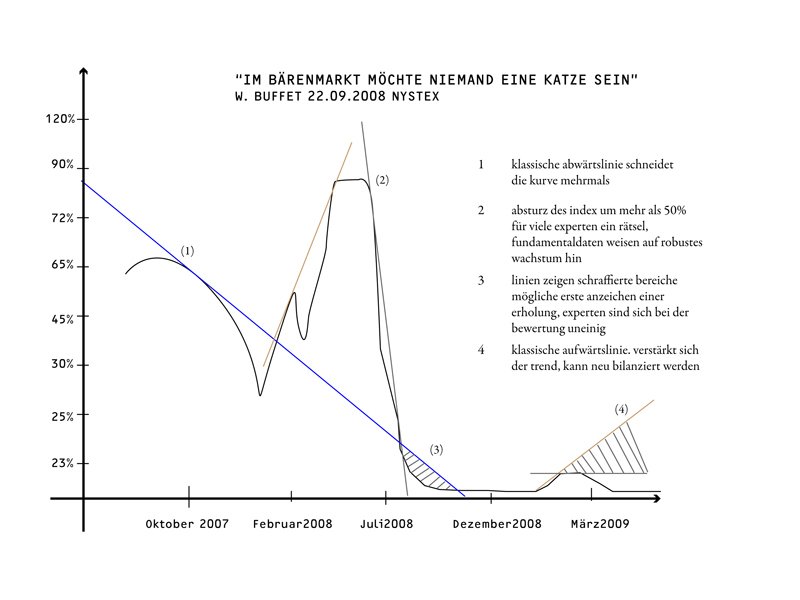
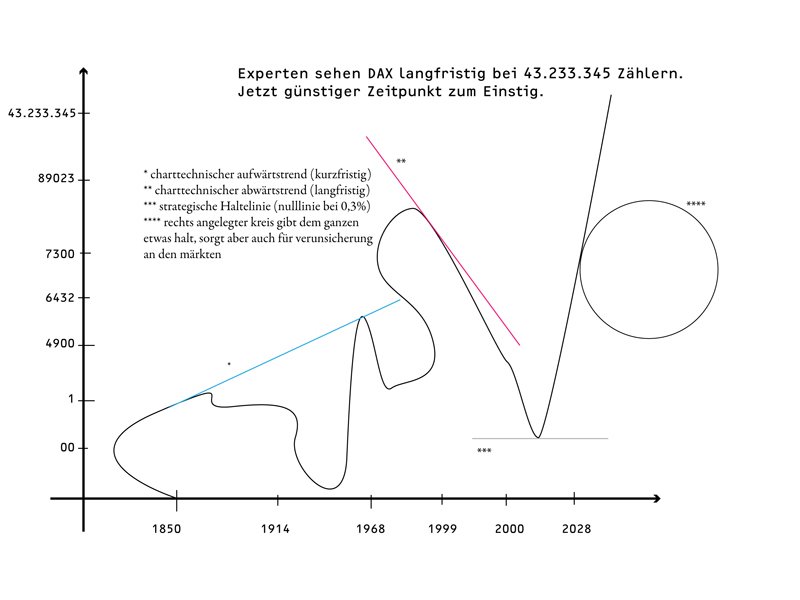
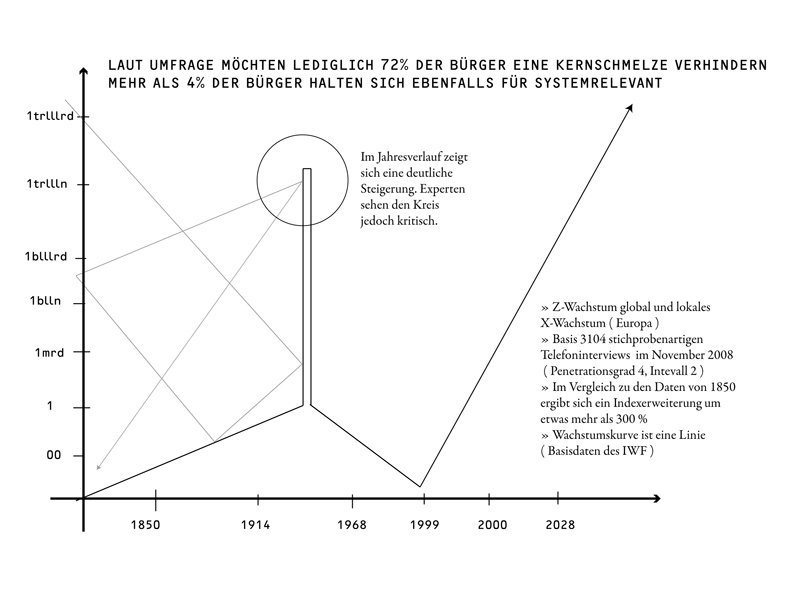
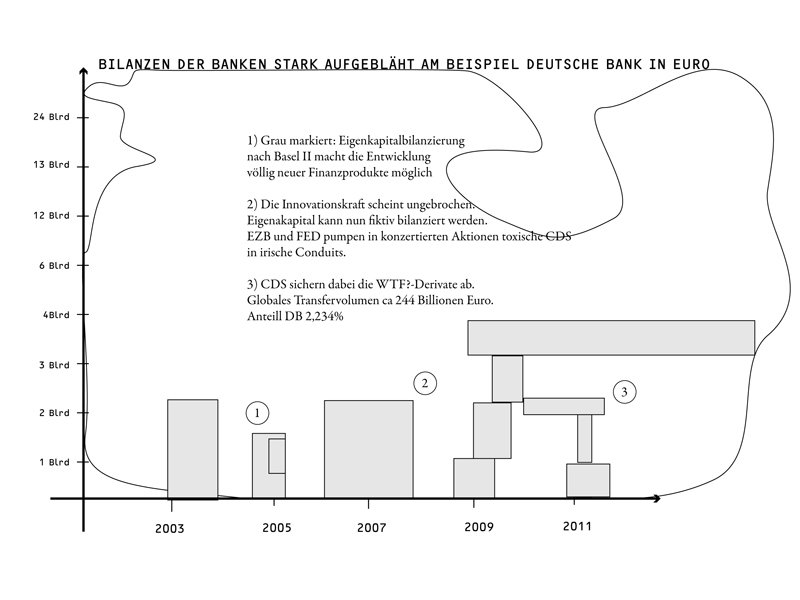
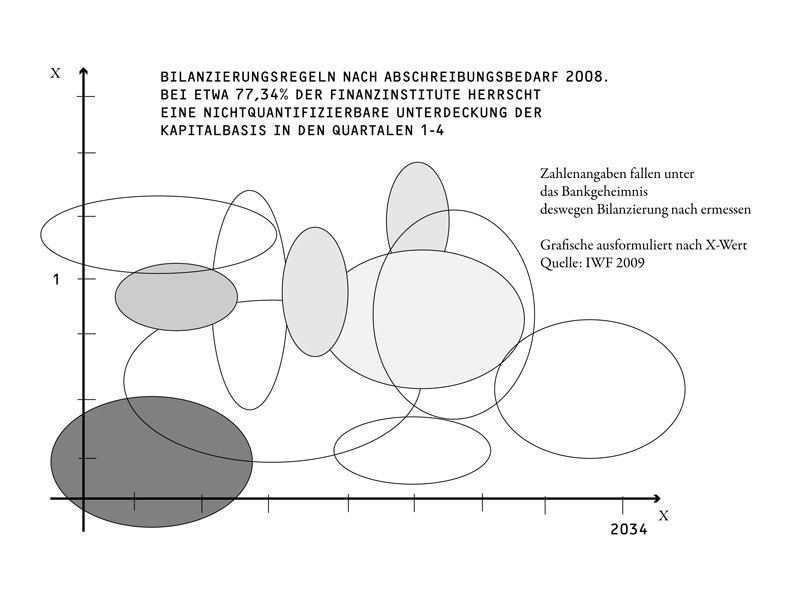
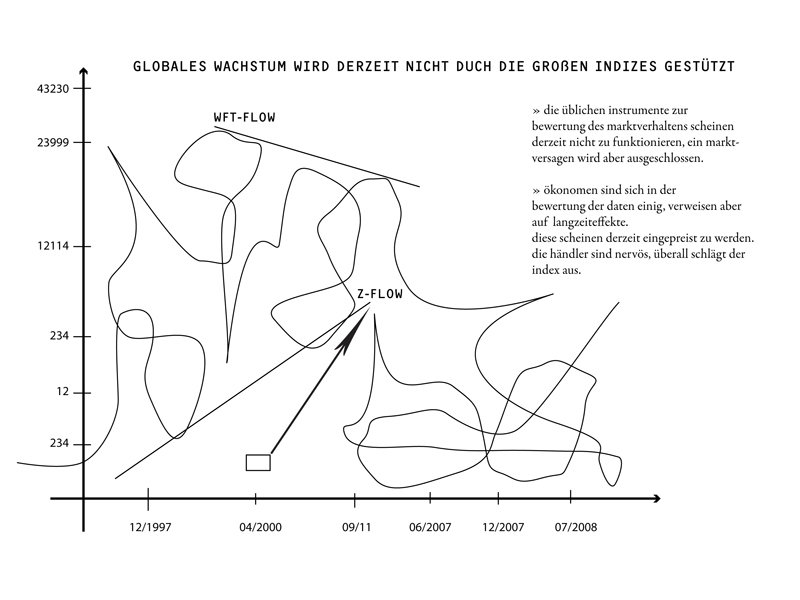
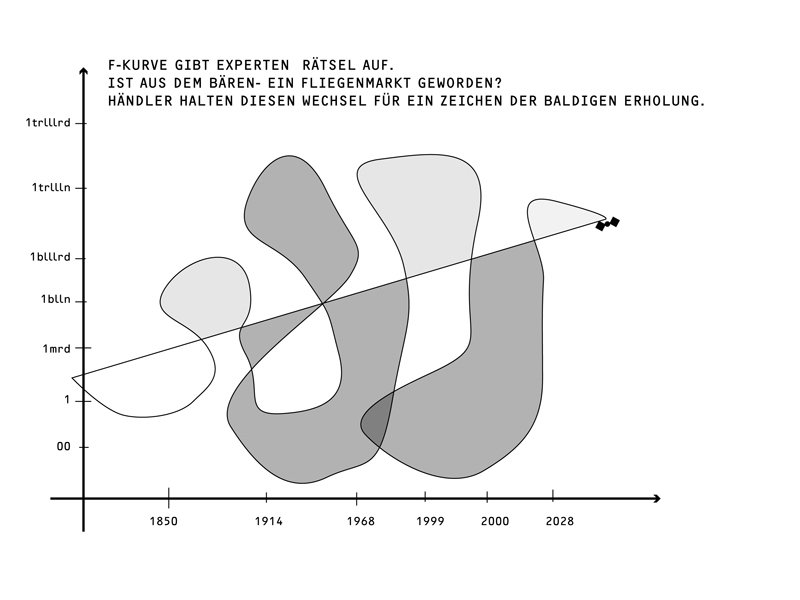
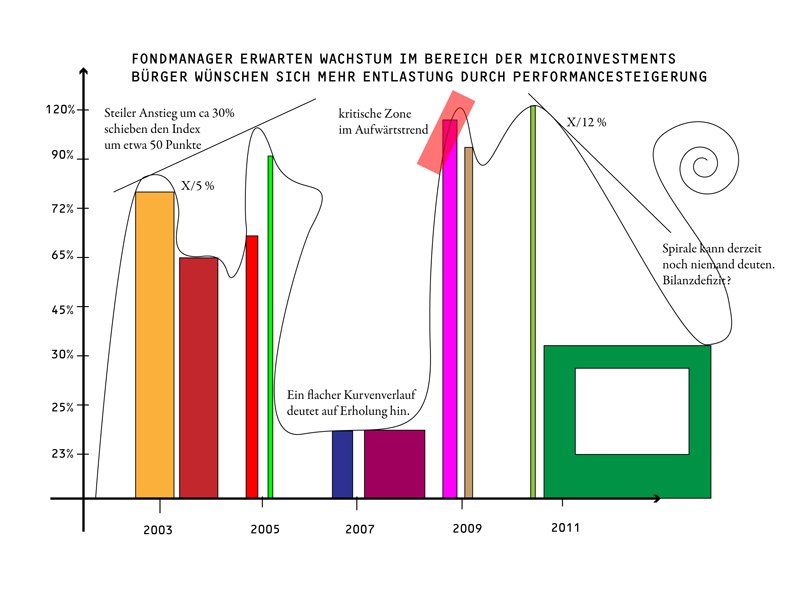
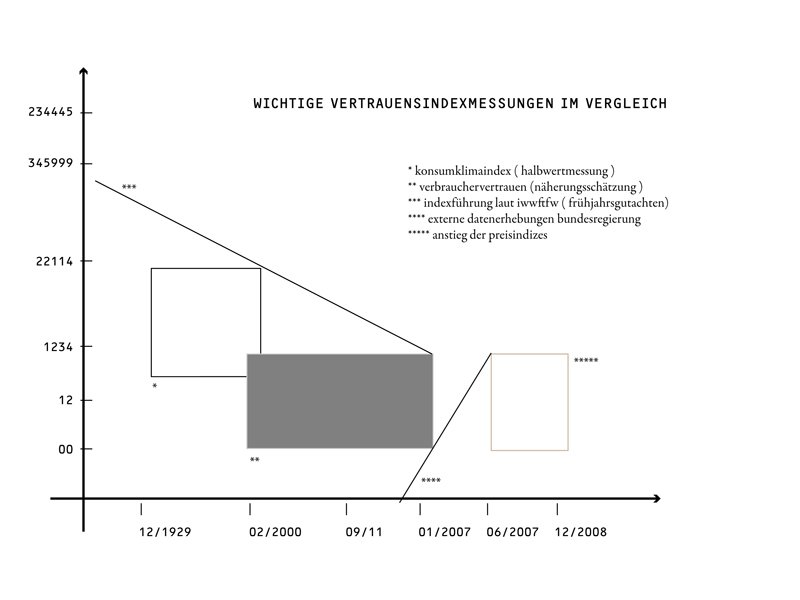
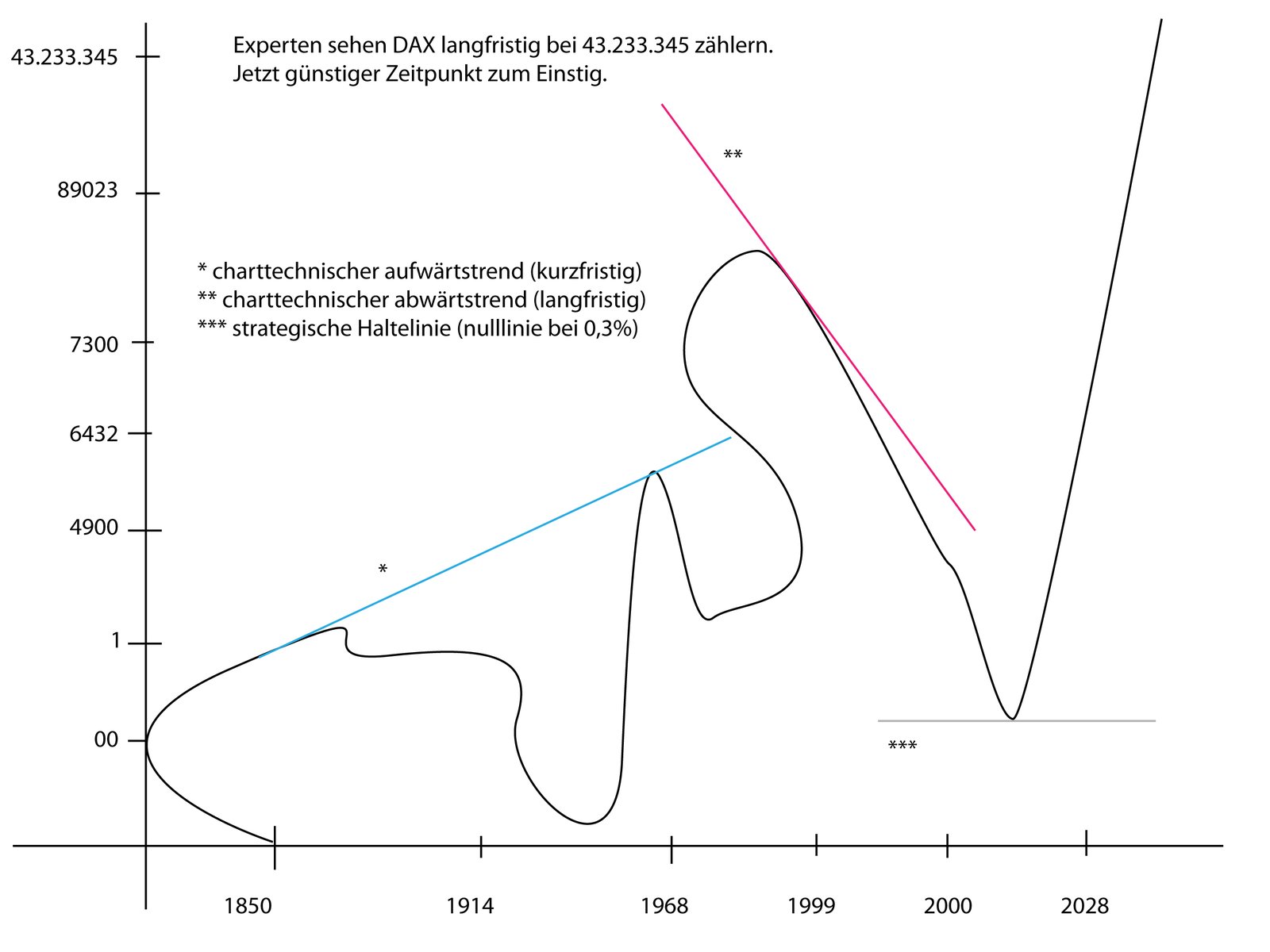
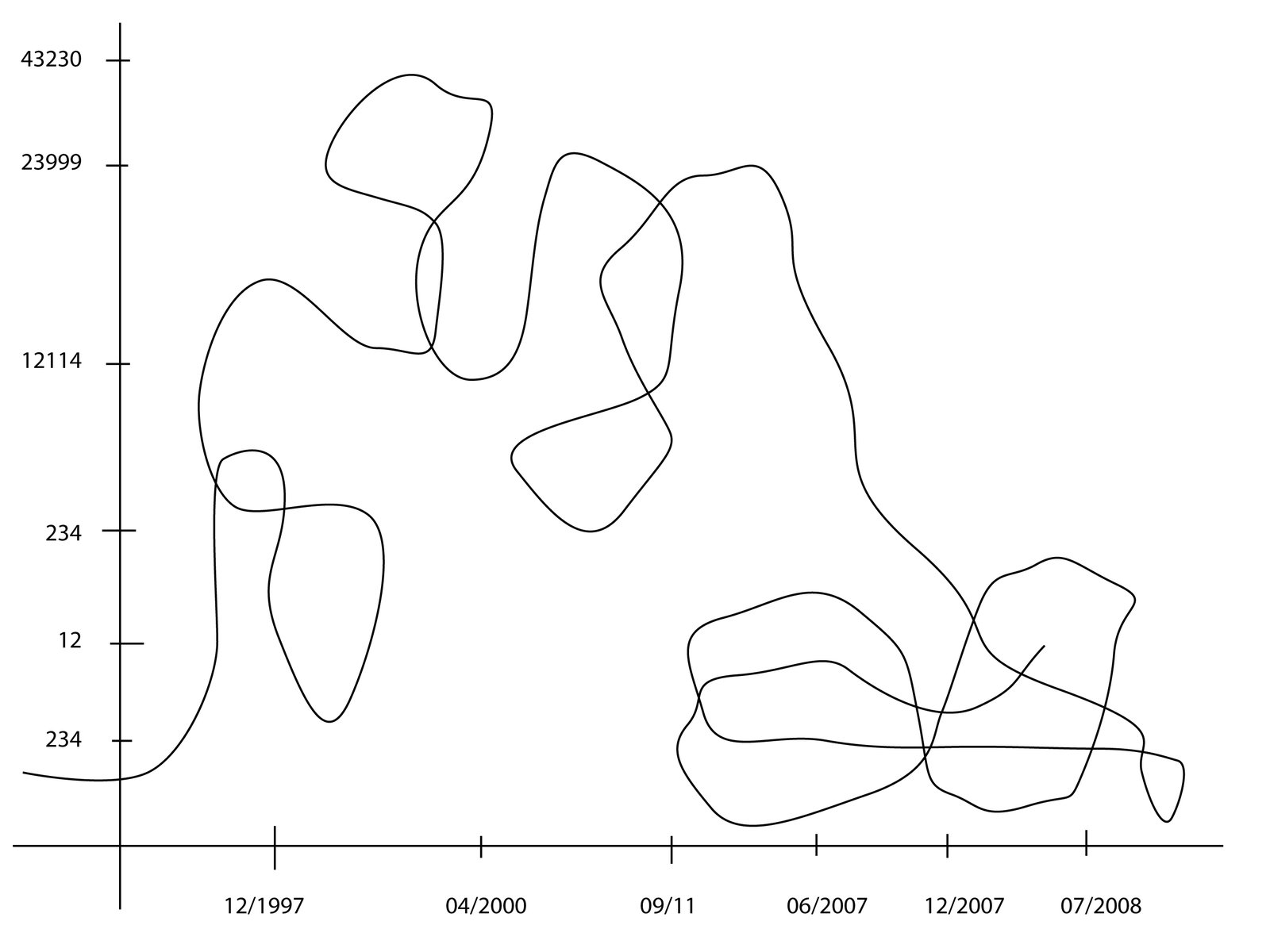
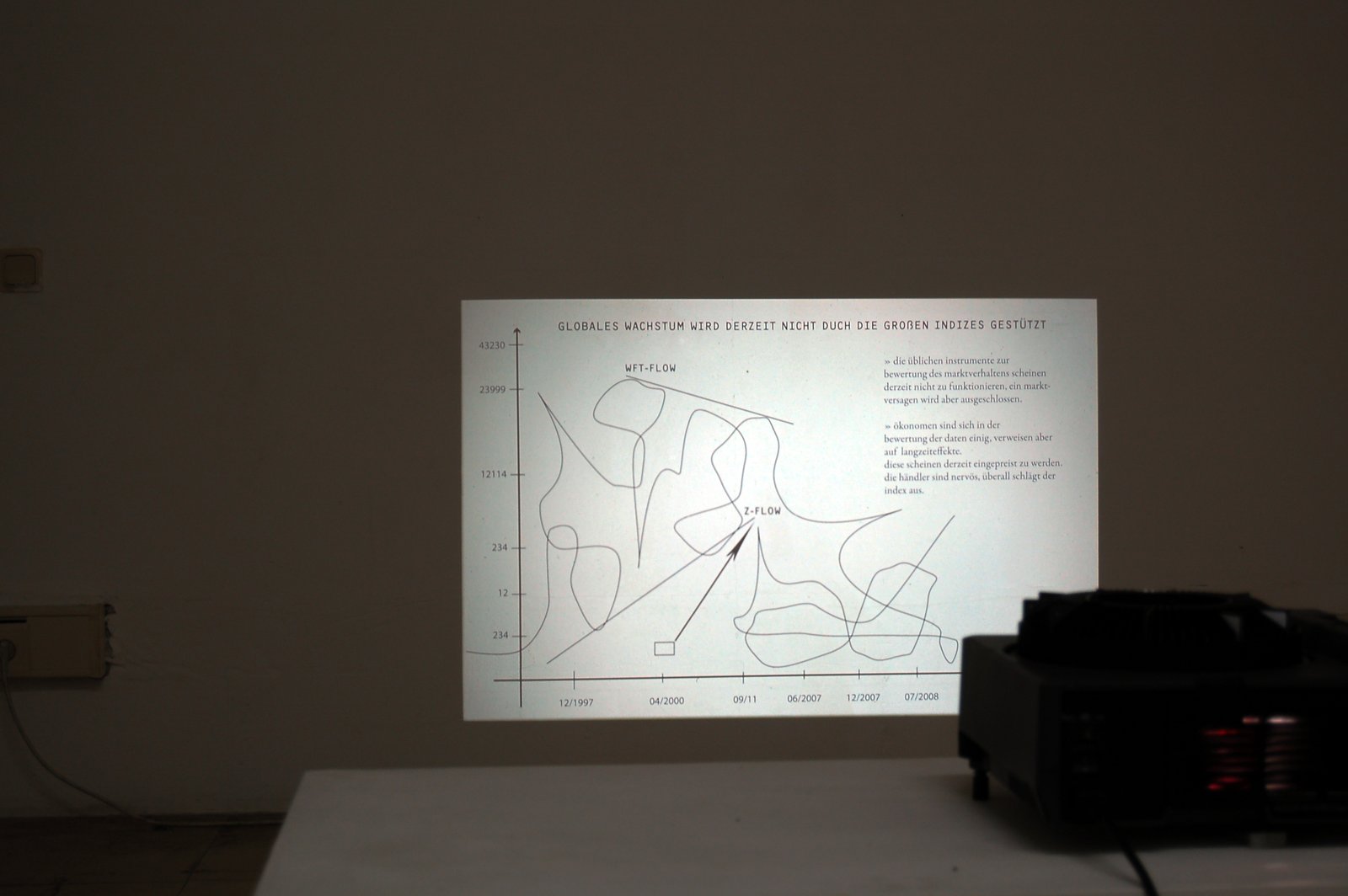
installation · B-L-A-S-T, 2009
Shown small: a single projector on a plinth throws each chart, no larger than a sheet of paper, onto the wall of the dark gallery — the analyst's slide reduced to a faint, provisional light.
global lifestyle of power
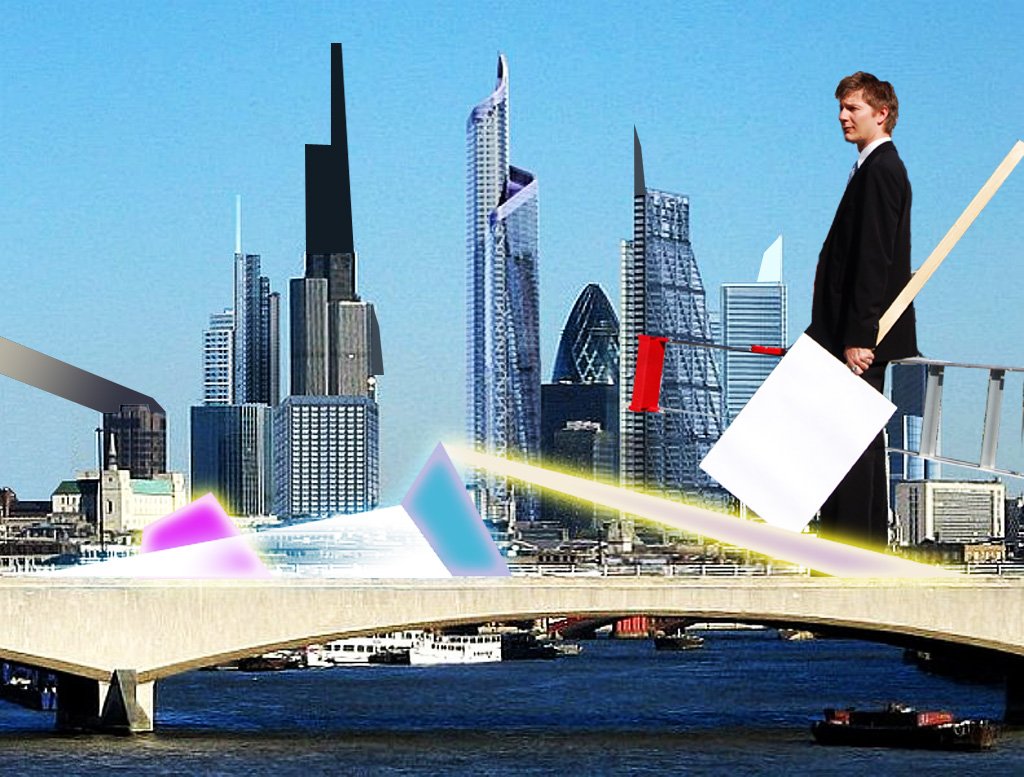
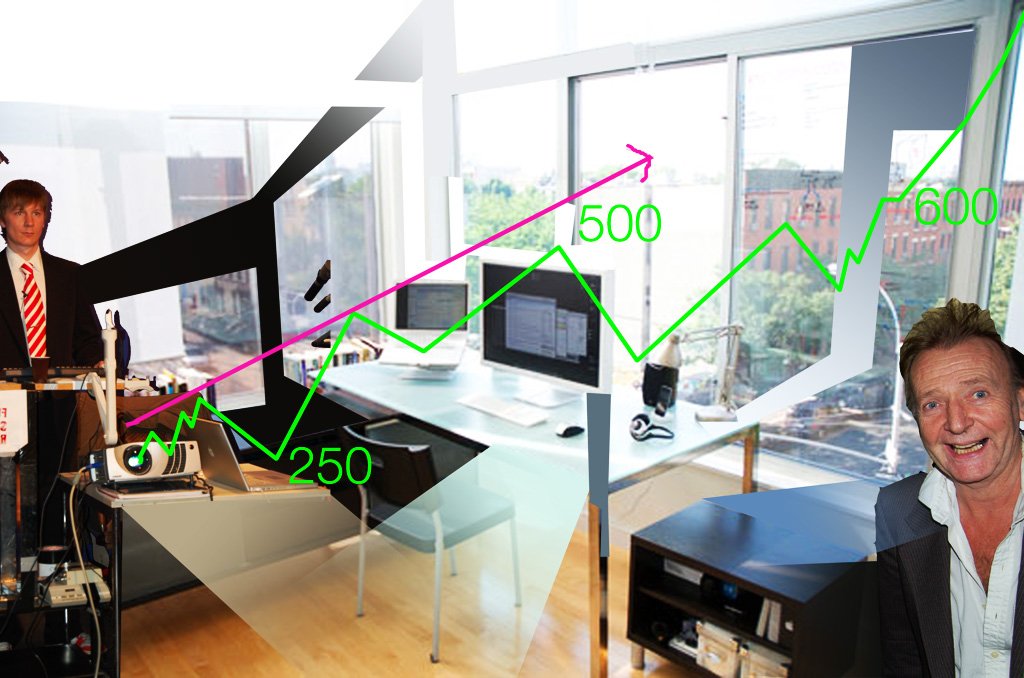
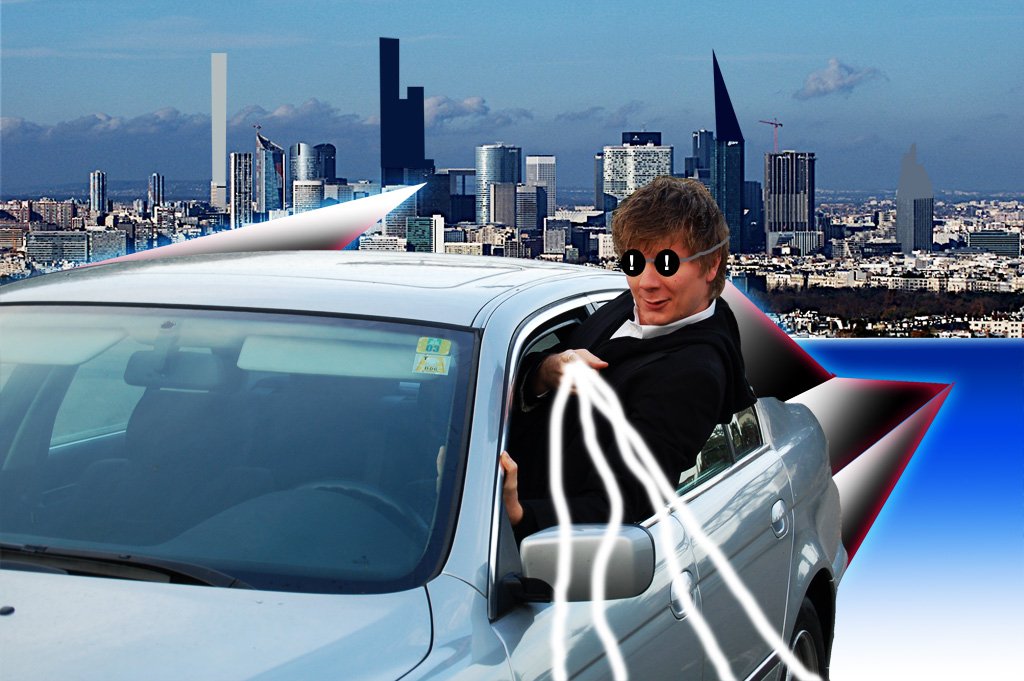
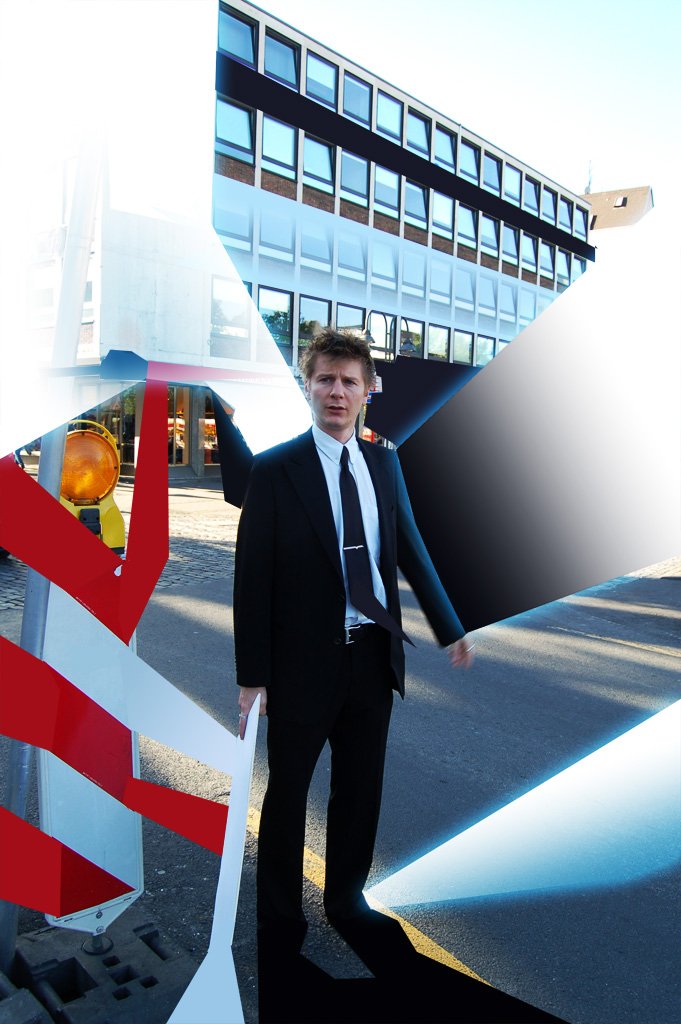
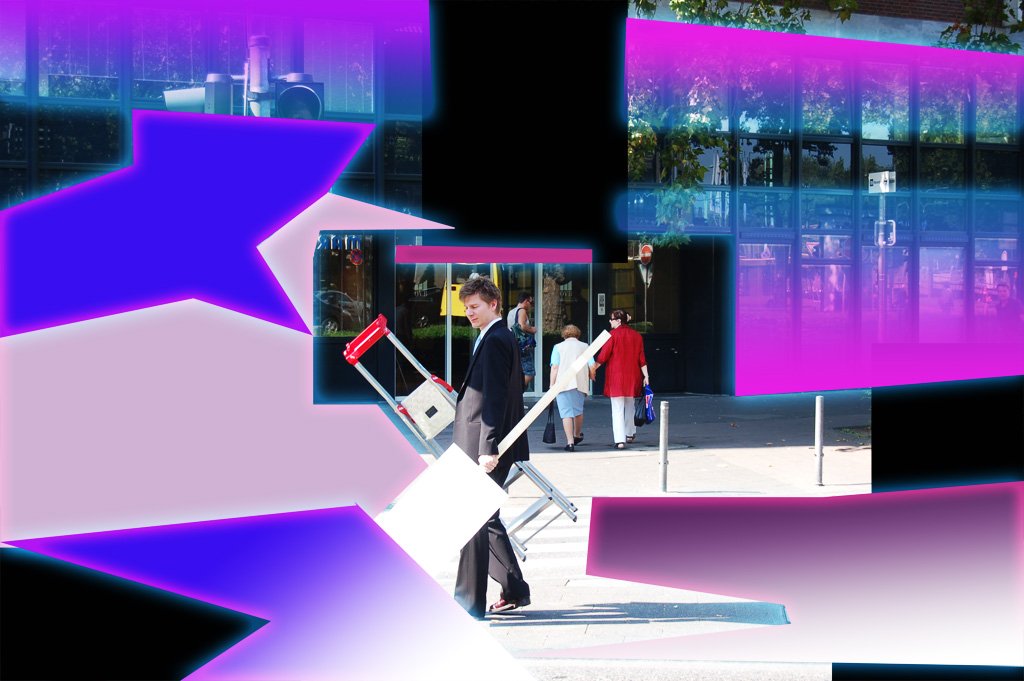
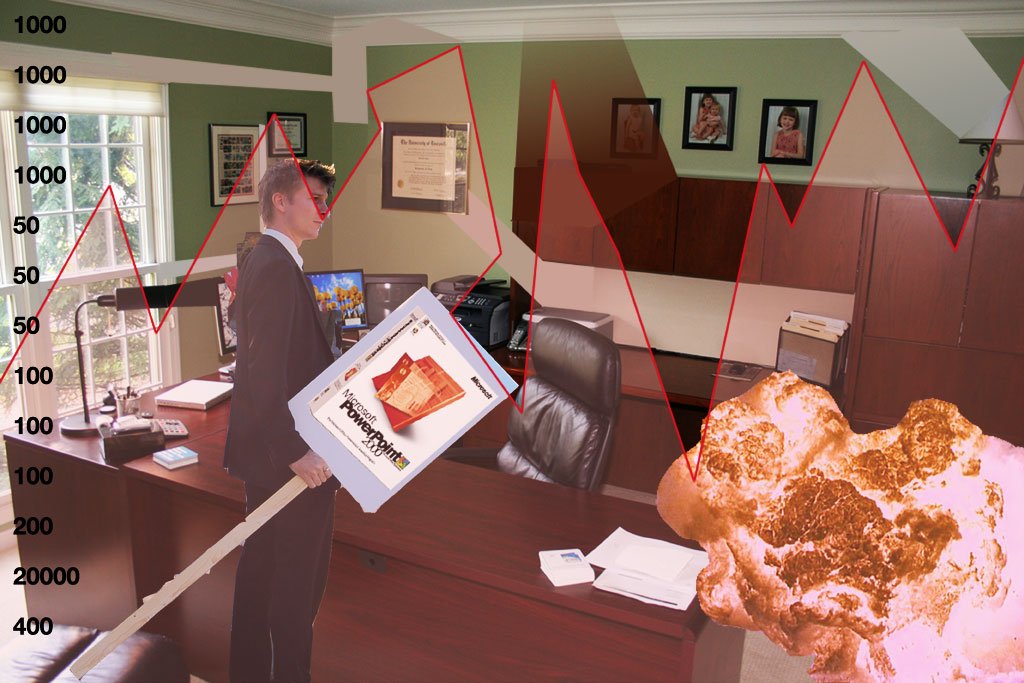
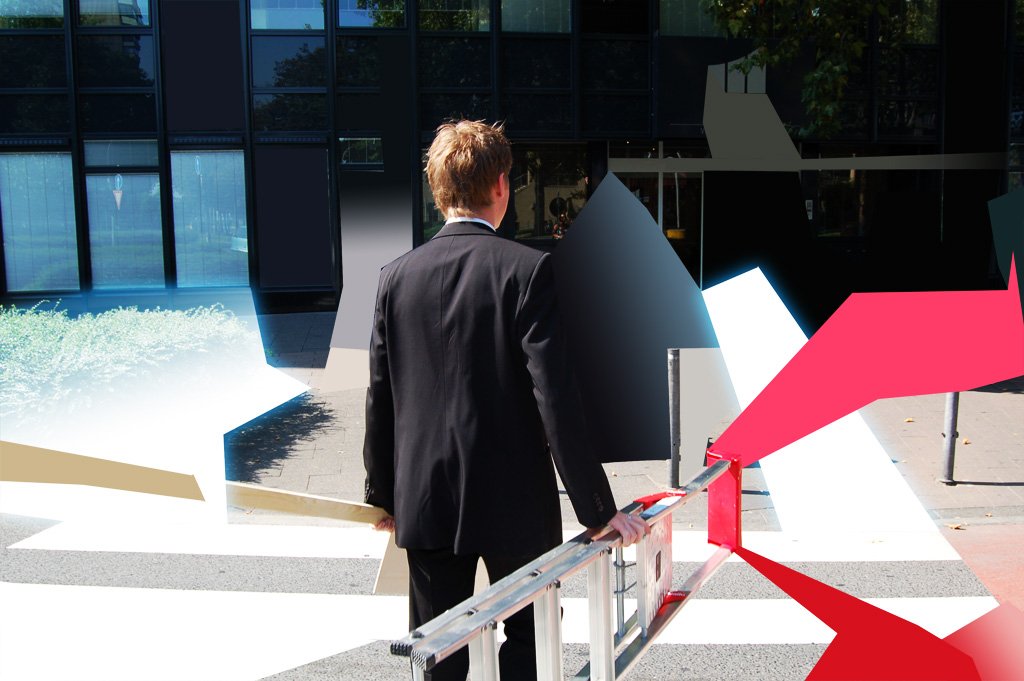
If the charts wear the analyst's voice, this series (2009) wears his suit. The artist puts on the costume of the global business leader and steps into the stock images of power — the corporate façade, the London skyline, the luxury car, the PowerPoint at the office with its rising green arrow. The persona is worn deadpan, exactly as advertising wears it, so that the aspiration and its emptiness show at once. The market as material becomes the market as a role one performs.
pussyimploder
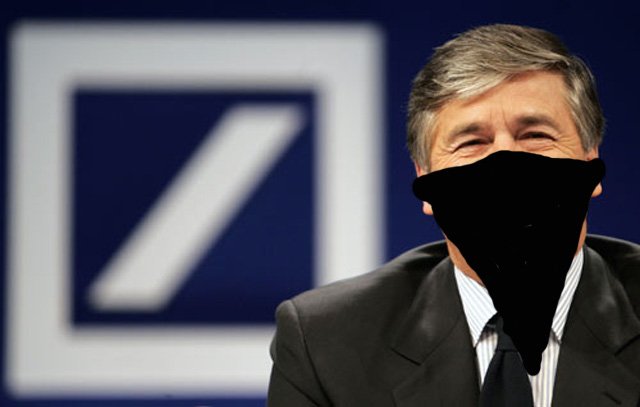
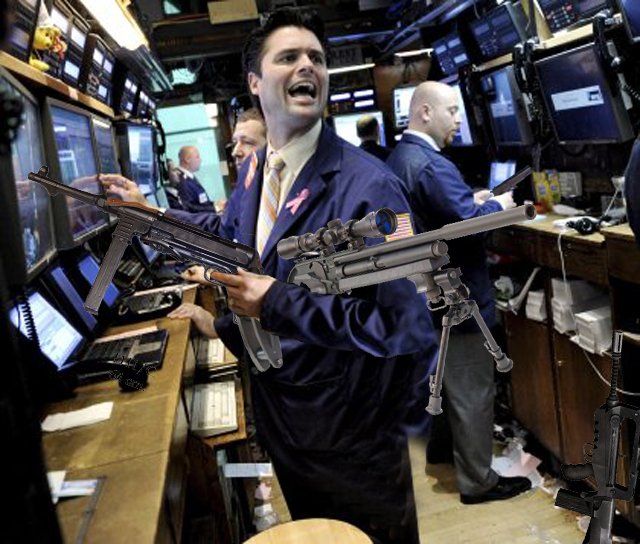
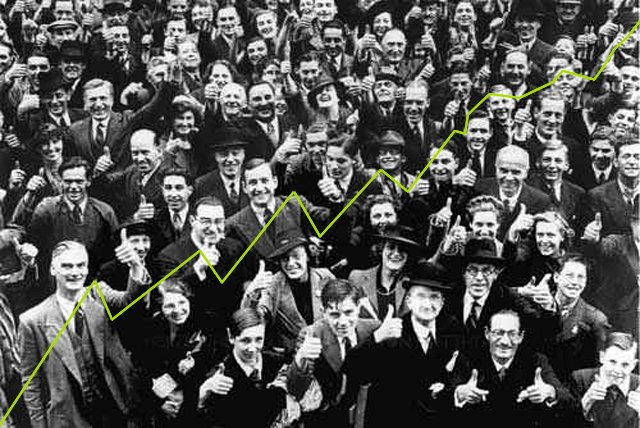
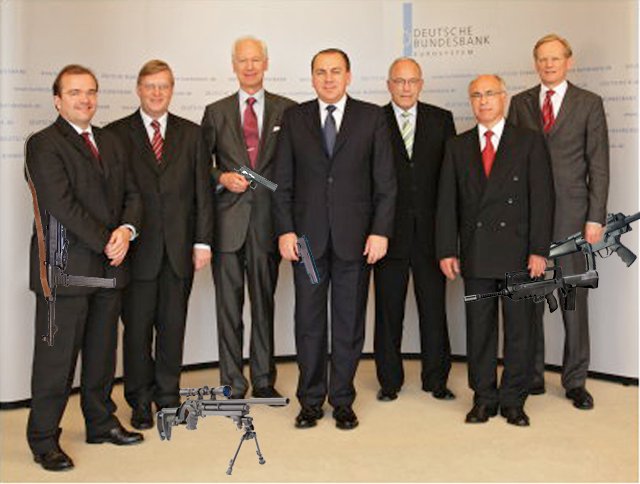
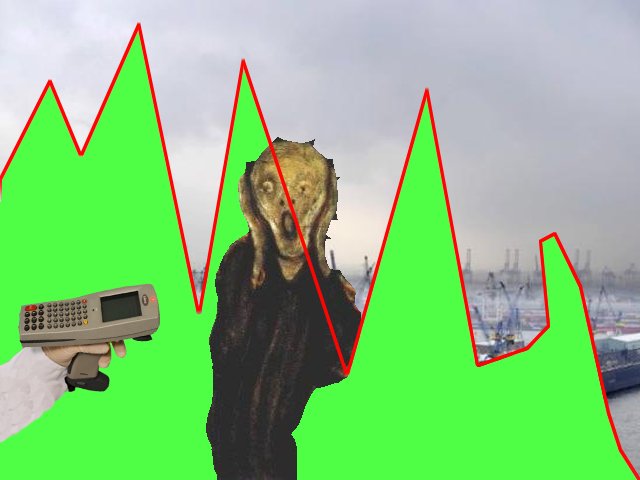
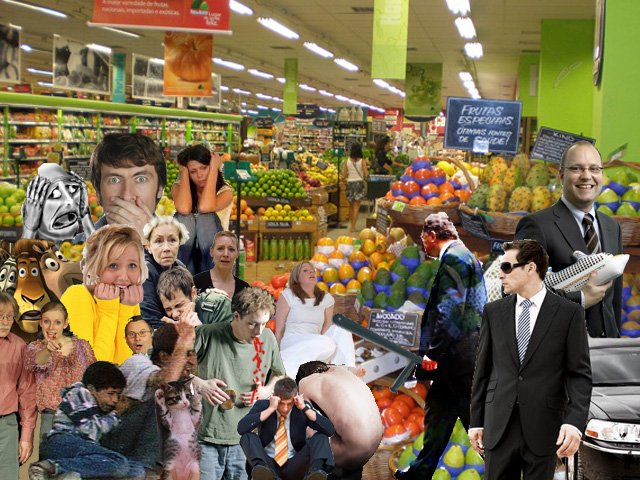
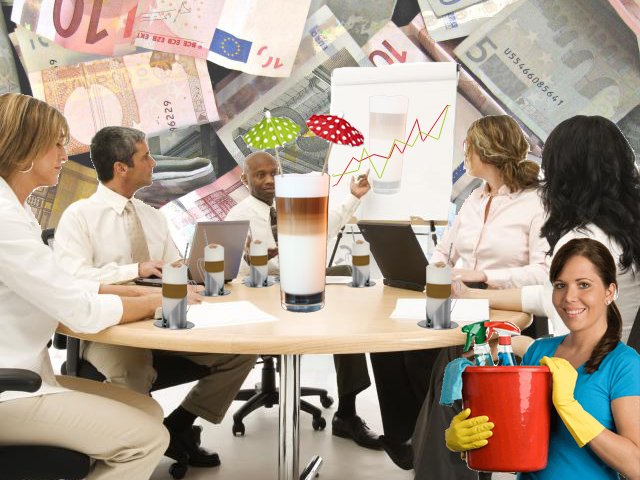
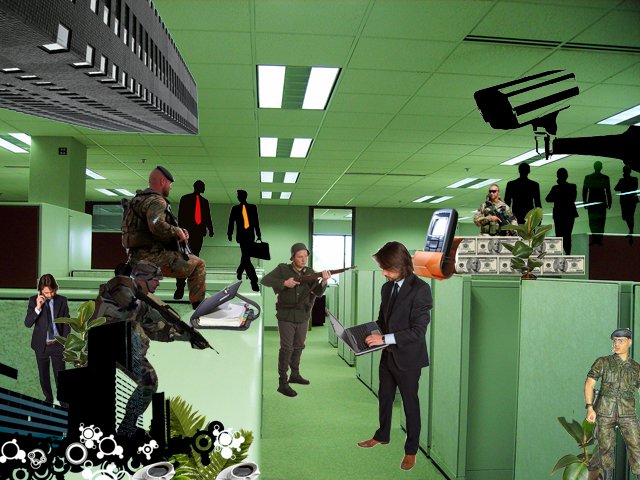
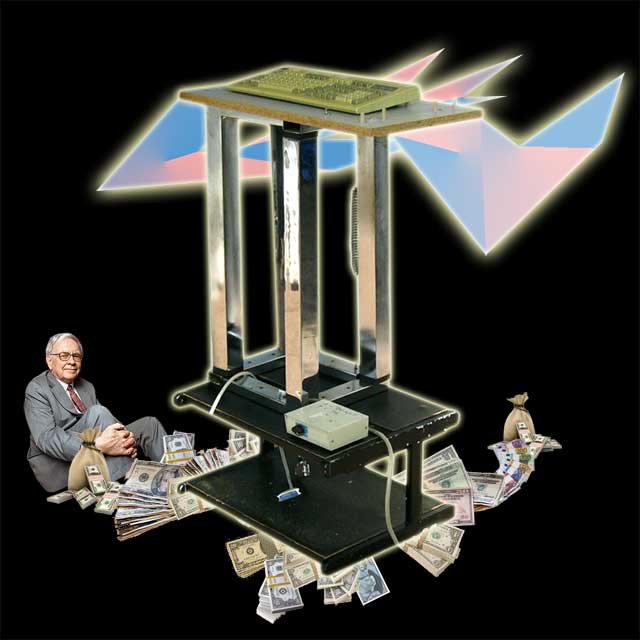
A blog project (2009–2011) that kept up a running montage of the financial crisis. Bankers are given the robber's mask, the trading floor is armed, the balance sheet is a bank robbery, and the customer is frightened in the aisle of the supermarket. The tone is fast, crude, and daily — the internet's own speed applied to the vocabulary of finance. A small selection is gathered here from a much larger stream; these are the montages that belong to the same argument as the rest of this cycle.

projects — floriankuhlmann.com